Shale Workgroup
The goal of the Coalition’s Shale Workgroup is to protect public health, communities and regional water resources from the impacts of natural gas development.
Monthly Call:
The Shale Workgroup’s monthly calls are held on the second Friday of each month at 11AM.
Workgroup Lead:
Chante Coleman, 443-927-8047
(ANNAPOLIS, MD)—Today, the Chesapeake Bay Program’s Principals’ Staff Committee moved to mark the completion of their directive from the Chesapeake Executive Council on including tribes as a formal and enduring partner. In response, Choose Clean Water Coalition Director Kristin Reilly issued the following statement.
(ANNAPOLIS, MD)—Today, it was announced that after two years of discussions, the Indigenous Conservation Council announced it will withdrawal from all discussions and formal engagement with the Chesapeake Bay Program.
(ANNAPOLIS, MD)—Yesterday, President Trump signed an Executive Order targeting the Chesapeake Bay restoration effort and the ability of states and localities to address stormwater pollution. In response, Choose Clean Water Coalition Director Kristin Reilly issued the following statement.
(ANNAPOLIS, MD)—Today, it was announced a decision on the future of tribal representation in the Chesapeake Bay restoration effort will be delayed. In response, Choose Clean Water Coalition Director Kristin Reilly issued the following statement.
(LANCASTER, PA)—Last week, more than 270 individuals from local, state, and national nonprofits, elected officials, government agencies, and businesses gathered for the 2026 Choose Clean Water Conference. With the nation soon celebrating it’s 250th anniversary, the conference provided a forum to discuss how these different sectors can work together to protect and restore the rivers and streams that feed the nation’s largest estuary, the Chesapeake Bay.
(WASHINGTON, DC)—Today, nearly 80 members of the Choose Clean Water Coalition met with their members of Congress to urge support for the restoration of the rivers and streams that feed the Chesapeake Bay.
(WASHINGTON, DC)—Last night, Congress passed a minibus appropriations package on a strong bipartisan basis. The package now heads to President Trump's desk. The legislation contains funding for programs critical to the Chesapeake Bay restoration effort. In response, Choose Clean Water Coalition Director Kristin Reilly issued the following statement.
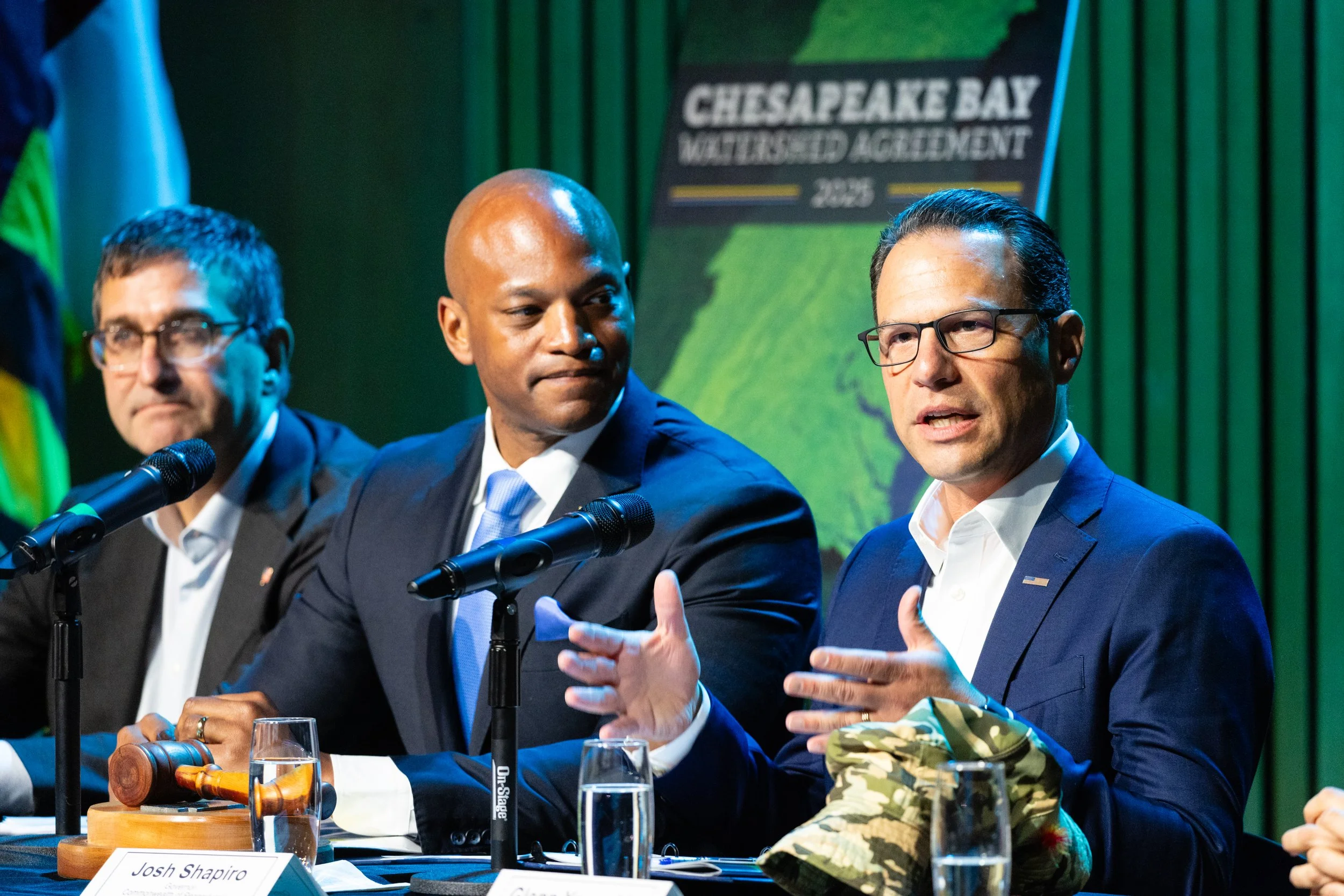
(BALTIMORE, MD)—The Chesapeake Executive Council met today to discuss the current state of the effort to restore the Chesapeake Bay and its rivers and streams. The meeting, attended by Maryland's Governor Wes Moore, Pennsylvania's Governor Josh Shapiro, Virginia's Governor Glenn Youngkin, Delaware’s Governor Matthew Meyer, District of Columbia Mayor Muriel Bowser, Chesapeake Bay Commission Chair Sara Love, and EPA Deputy Administrator David Fotouhi, comes at a critical juncture in the Bay restoration effort.
(ANNAPOLIS, MD)—Yesterday, the Choose Clean Water Coalition submitted formal feedback to the draft revised Chesapeake Bay Watershed Agreement. Ultimately, 91 organizations endorsed the Coalition's feedback letter. In response, Choose Clean Water Coalition Director Kristin Reilly issued the following statement.
Tools:
Transcontinental Gas Pipe Line Notice of Intent (June 2017)
Citizens Guide to Fracking Permits in West Virginia (March 2017)
Concerned Health Professionals of NY Compendium of Research (April 2016)
Coalition Letters:
Letter to Governor Larry Hogan
(March 2017)West Virginia Rivers Coalition on Draft Environmental Impact Statement for Mountain Valley Pipeline
(December 2016)swidasjgfbkadghej (August)
Don't see the materials you are looking for? Check the member login.
State Surrenders to Fossil Fuel Industry Instead of Protecting Health of West Virginians
37 local, regional, and national nonprofit organizations around the Chesapeake Bay watershed submitted a joint letter to Governor Hogan and select legislators to show their support for state legislation to stop hydraulic fracturing, or “fracking,” from beginning in Maryland.
(PROVIDENCE, RI)—Yesterday, the future of menhaden and the critters that rely on them received promising news with a rougly 30 percent cut to the Chesapeake Bay Reduction Fishery Cap. Often called “the most important fish in the sea, menhaden serve as a critical pillar in the Chesapeake Bay’s food chain. In response, Choose Clean Water Coalition Policy Manager Sara Ramotnik issued the following statement.