Maryland
“If the Chesapeake Bay is to survive, it must be addressed as an entity, as a total system without duplication and without omission.”
Former U.S. Senator Charles “Mac” Mathias (R-MD)

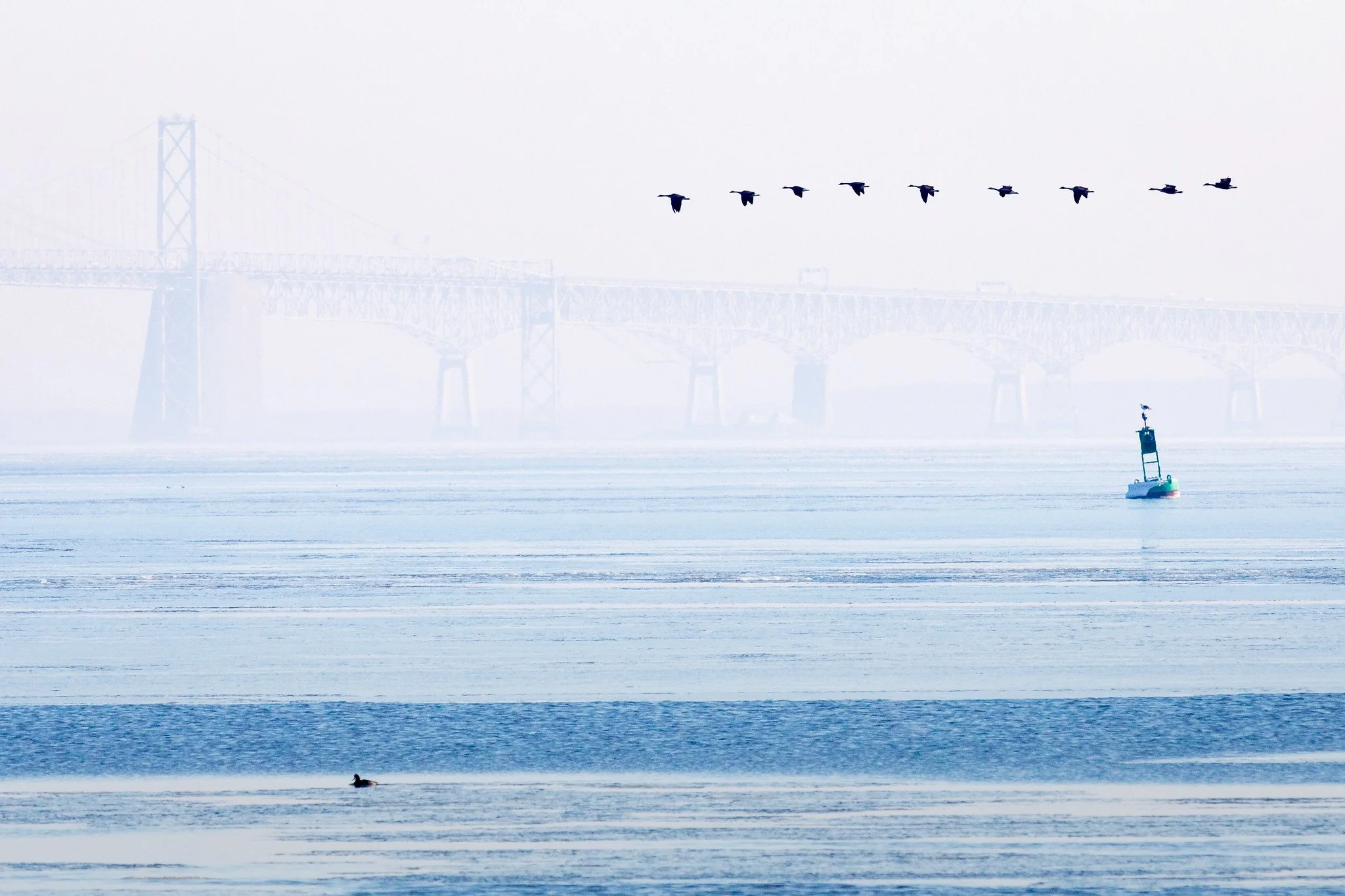
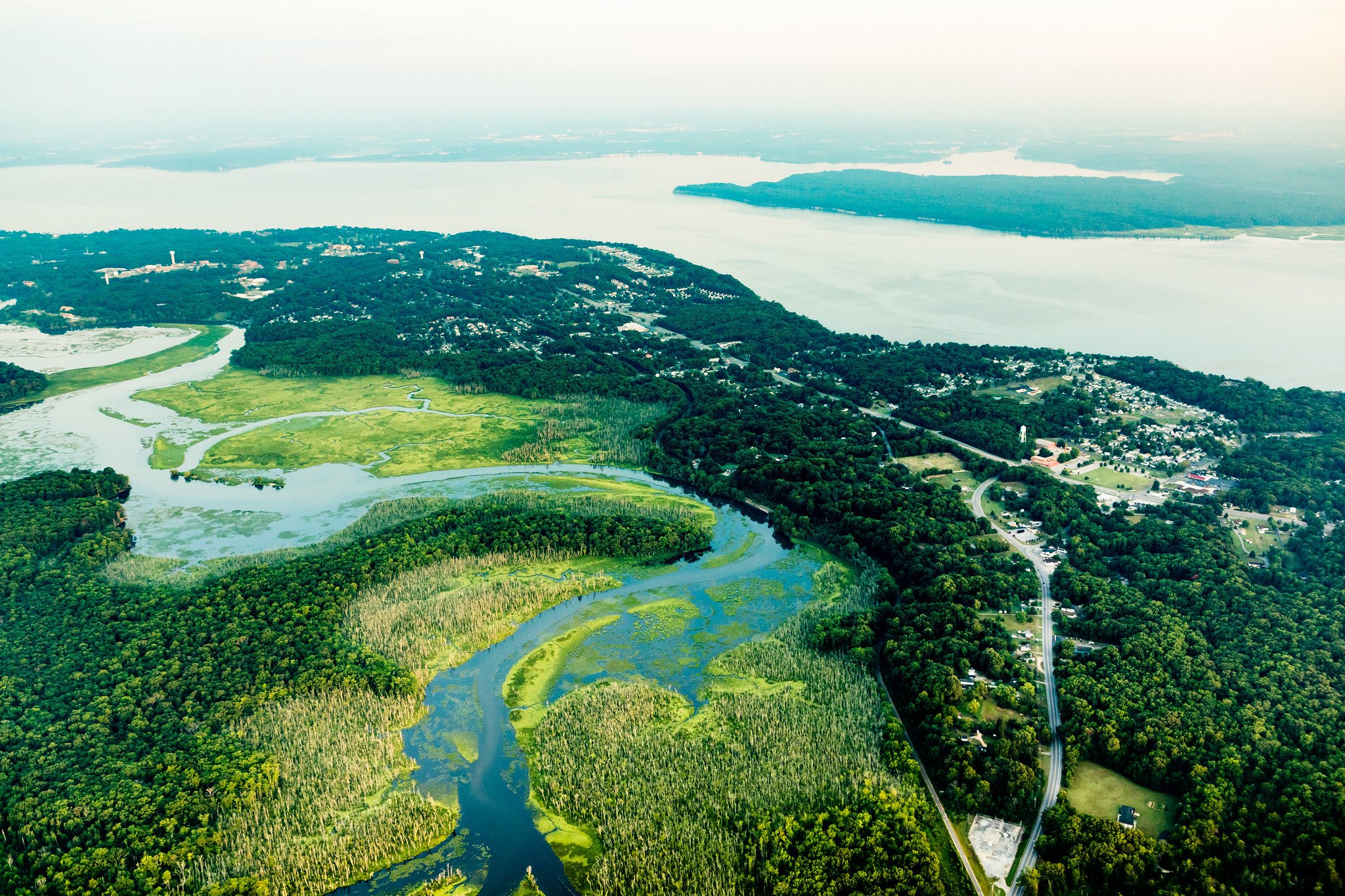
While the Chesapeake Bay watershed spans 64,000 square miles, the Bay itself is about 200 miles long, stretching from Havre de Grace, Maryland to Virginia Beach, Virginia. Maryland has 6,776 miles of shoreline bordering the Chesapeake Bay and its tributaries.
Excess nutrient pollution is the leading cause of the decline and degradation of the Chesapeake Bay and its tributaries. Water quality had been in decline since the 1950s and was taking a turn for the worse; by the 1970s the Chesapeake was at a tipping point where aquatic life was rapidly disappearing from the Bay’s waters. To determine the cause of the failing Bay health, U.S. Senator Charles “Mac” Mathis (R-MD) sponsored a Congressionally funded $27 million, five-year study. The study was published as a series of reports in the early 1980s and identified excess nutrient pollution as the leading cause of Chesapeake Bay degradation. To combat nutrient pollution, Maryland, Virginia, Pennsylvania, and the District of Columbia signed the 1983 Chesapeake Bay Agreement and formed a regional partnership.
The Chesapeake Bay continues to be a focal point for Maryland, both culturally and economically. A healthier Bay contributes not only to the health of Maryland’s citizens and communities, but also provides outdoor recreation and industries that contribute to our State’s economic health. As the state of Maryland continues efforts to reduce the pollution affecting the Bay’s health, we strive to look for new and innovative ways that not only restore water quality but also strengthen local economies and communities.
Coalition Lead
Monthly Call
The Maryland Member Call is the third Tuesday of the month at 11:00 a.m.
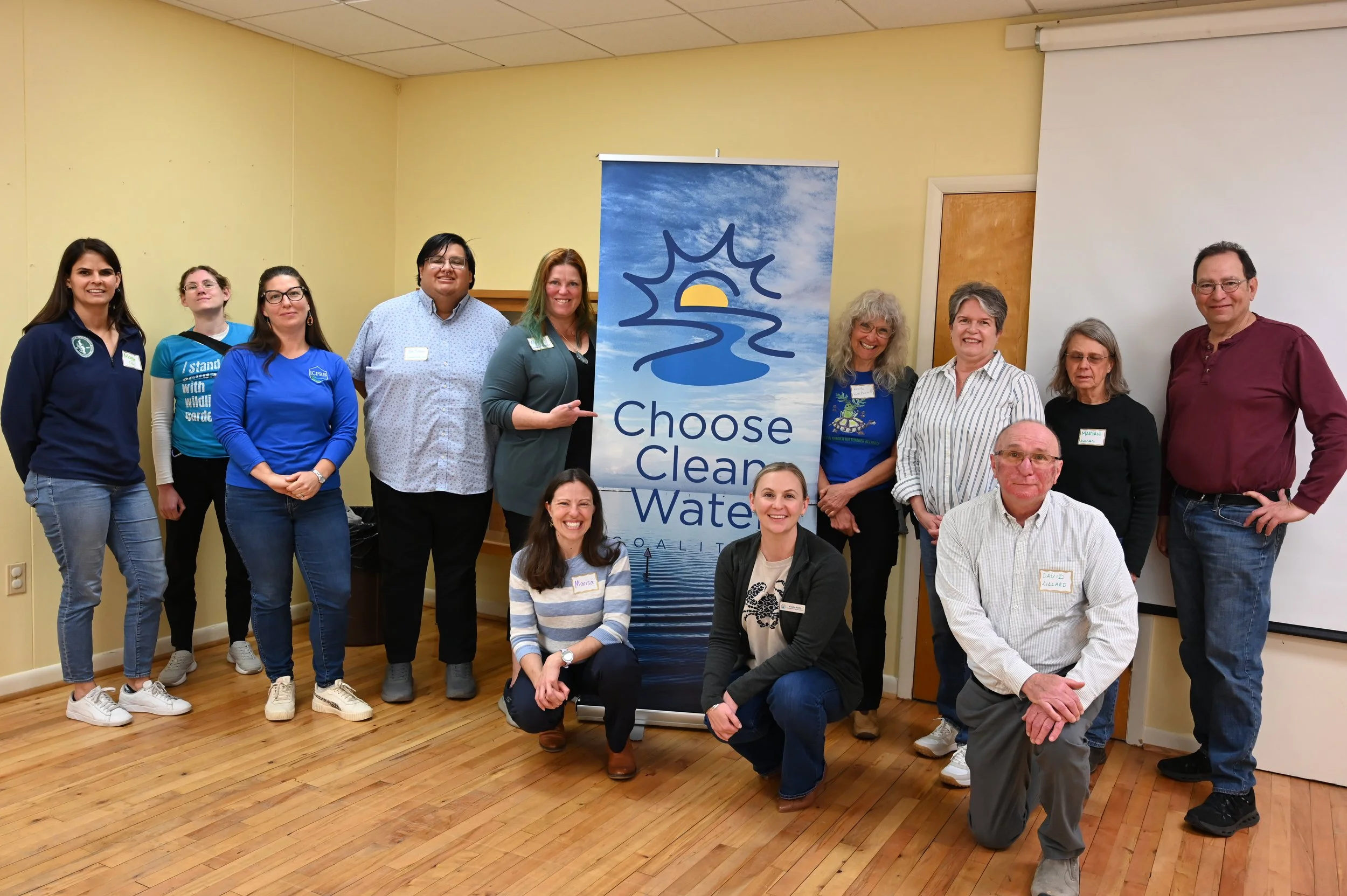
Members of the Maryland Choose Clean Water Coalition convened on April 21 in Point of Rocks—a small town south of Frederick, Maryland and adjacent to the Potomac River.
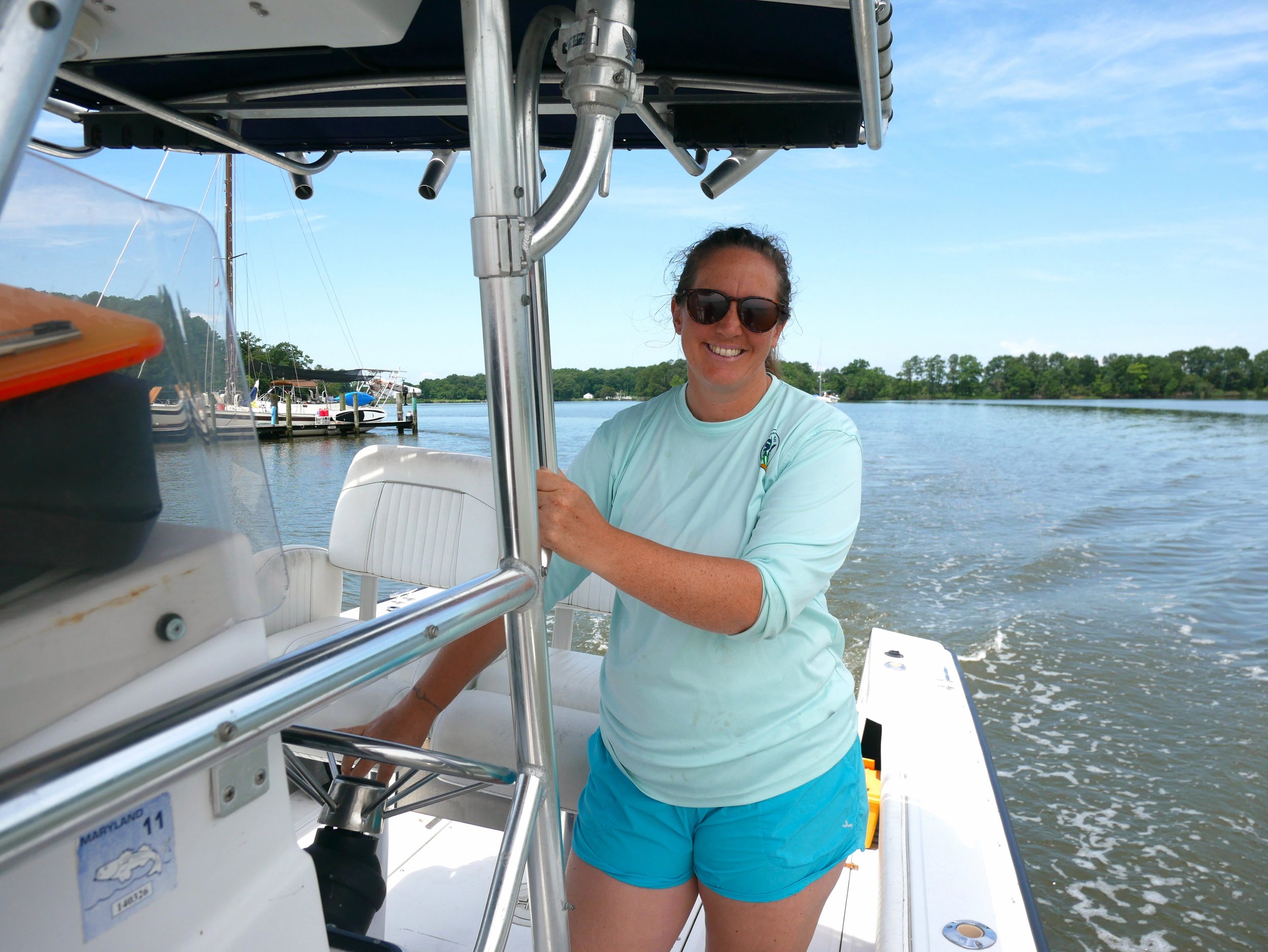
For this Member Highlight, the Coalition's Maryland State Lead, Marisa Olszewski had a discussion with Annie Richards, Chester Riverkeeper at ShoreRivers. The two had a conversation about Annie’s role as a Riverkeeper and the important water monitoring programs ShoreRivers provides.

For this Member Highlight, the Coalition's Maryland State Lead, Marisa Olszewski, interviews Janette Rosenbaum, President at Muddy Branch Alliance.
For this Member Highlight, the Coalition’s Maryland Lead, Marisa Olszewski, interviews Bonnie Bick, Vice President of Mattawoman Watershed Society and Tina Wilson, MWS Committee on Strategies and Coalition Building.

For this Member Highlight, the Coalition’s Maryland State Lead, Marisa Olszewski, interviews Kelly Collins Choi, Director of Policy and Land Conservation at Casey Trees. Their edited conversation follows.

Retiree Bob Zillig is fighting to preserve his waterfront community’s peace, quiet, and remaining scrap of tidal and nontidal wetlands.

For this Member Highlight, the Coalition’s Maryland State Lead, Marisa Olszewski, interviews Emma Green, General Manager of the St. Mary’s River Watershed Association.

My name is Rosa Hance (she/her) and I am thrilled to begin my work as Energy Policy Contractor for the Choose Clean Water Coalition.

The Conowingo Dam, owned by Constellation Energy, is one of the largest non-federal hydroelectric dams in the United States. For decades, the dam has protected the Susquehanna river and the Chesapeake Bay from stormwater and agriculture runoff. But its ability to protect wildlife, water quality, and public health is dwindling. So, whose responsibility is it to clean it up?

A long-time member of the Choose Clean Water Coalition, Nature Forward may look like a group you have never heard of, but perhaps you were familiar with the Audubon Naturalist Society?

In 2021, Maryland State Delegate Tony Bridges led legislation improving forest conservation , environmental justice, and voted for clean water on policies related to stormwater, transportation, and land use. All of this will serve him well as he begins his new role as Executive Director of Blue Water Baltimore.

On Wednesday, October 27, the Choose Clean Water Coalition’s Equity Workgroup hosted Congressman John Sarbanes (D-MD) for a candid conversation on environmental justice issues in the Chesapeake Bay watershed.

Between 2012 and 2019, Frederick County experienced a net loss of about 480 acres of forest, or an average of nearly 70 acres annually. This is because forward-thinking "no net loss of forest" policies were repealed in 2011 by the County Council. After years of perpetual loss, it was time to make a big change.

To pass strong environmental legislation, we must have the right elected officials in office. Nothing is more important to that goal than a robust election where voters'—all voters'— voices are heard and champions are elected that reflect their conservation values over the interests of those who would pave over forests and eliminate environmental protections.
Last month, the Coalition staff and a group of our supporters ventured to Patuxent River Park to get an up-close look at the ospreys that call it home and learn about the challenges they are facing.