
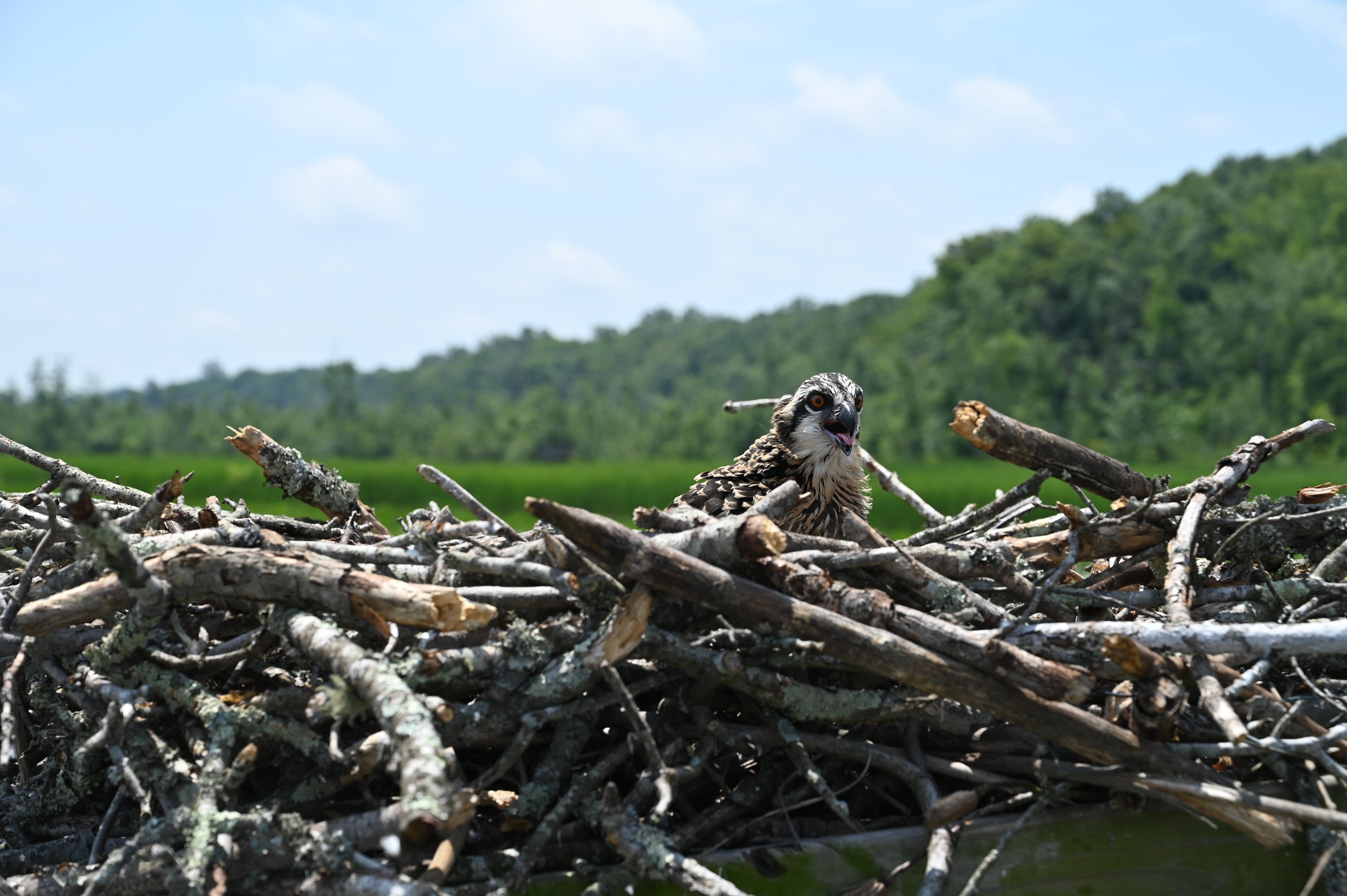
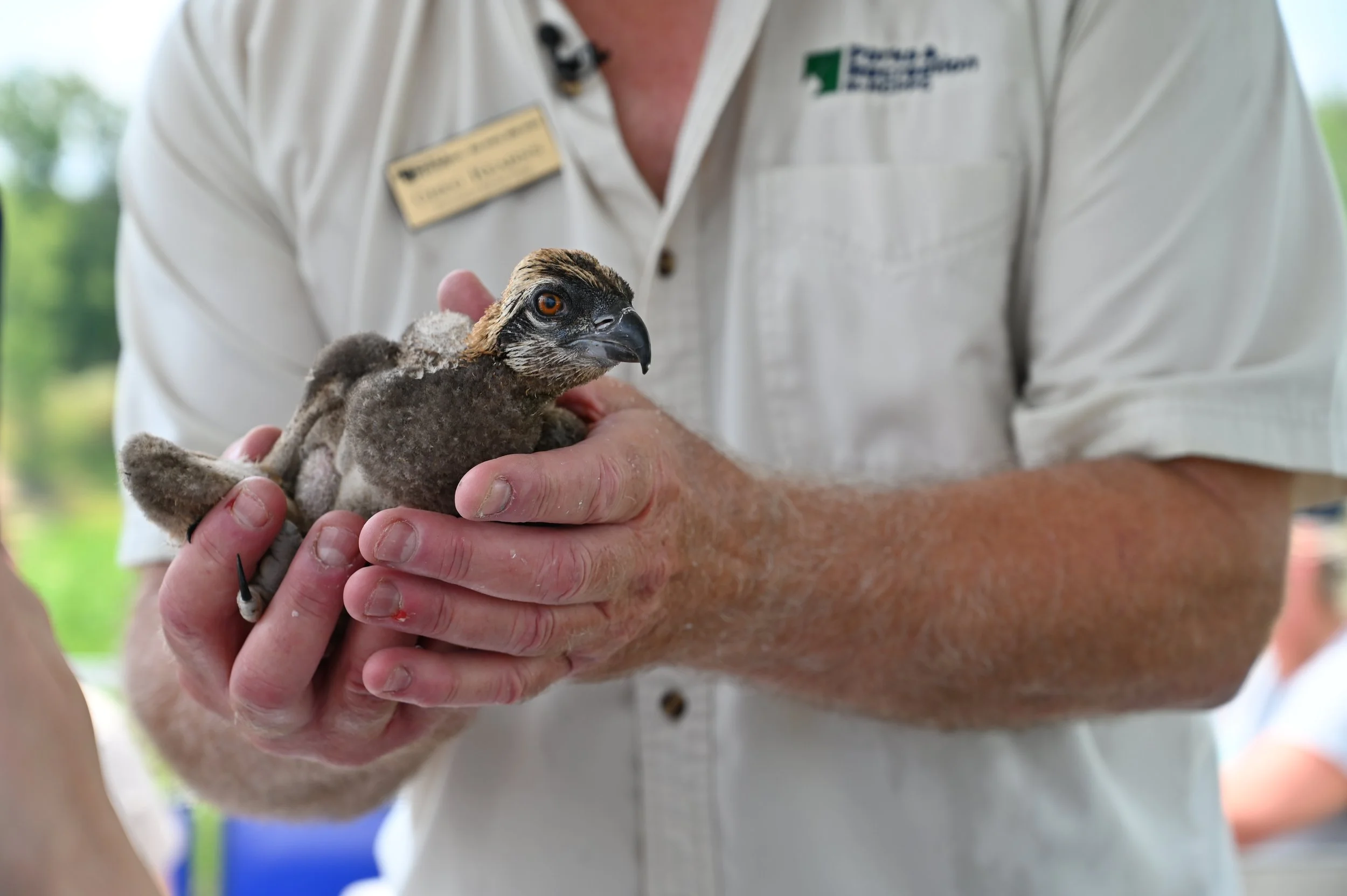
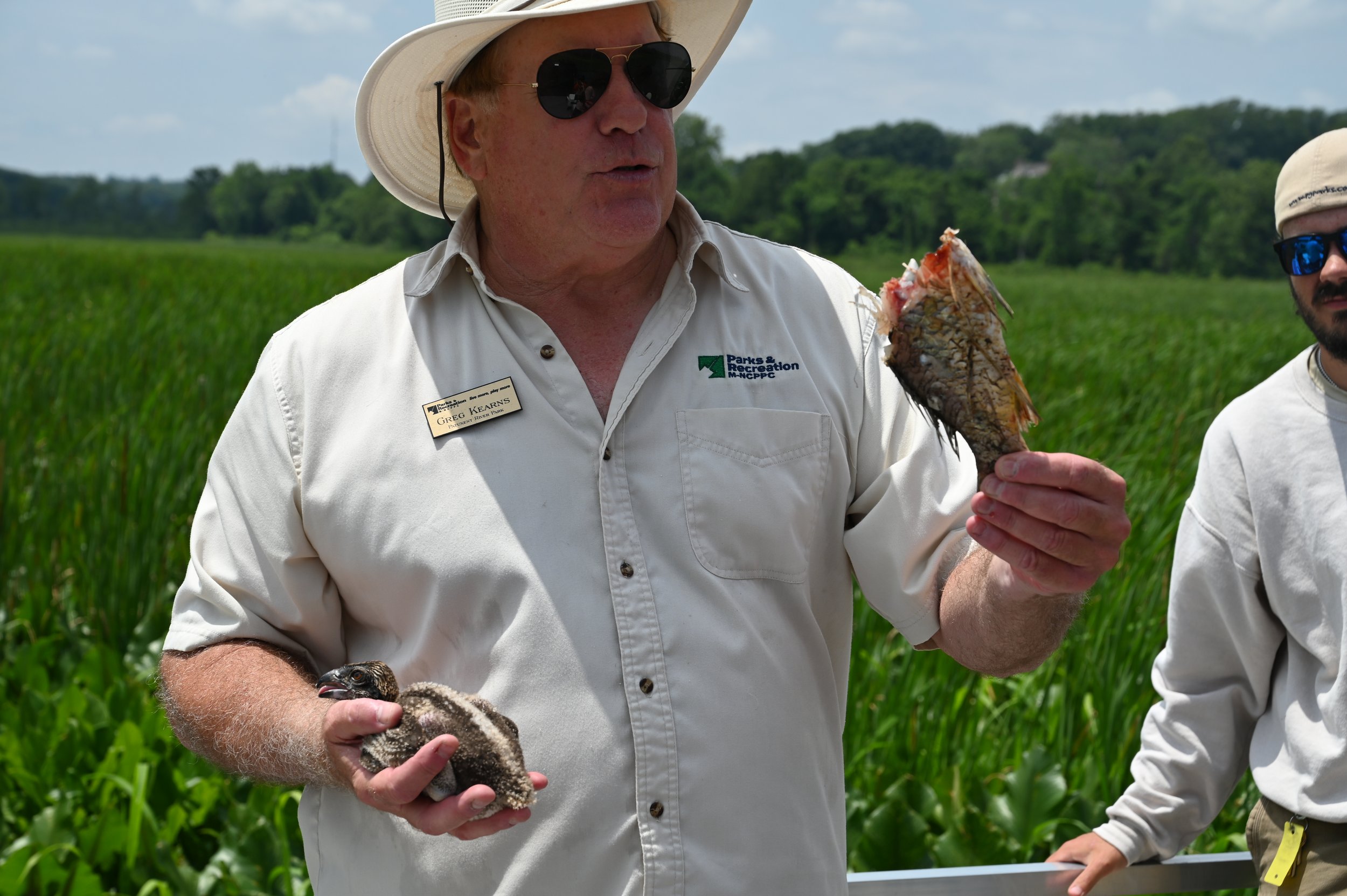
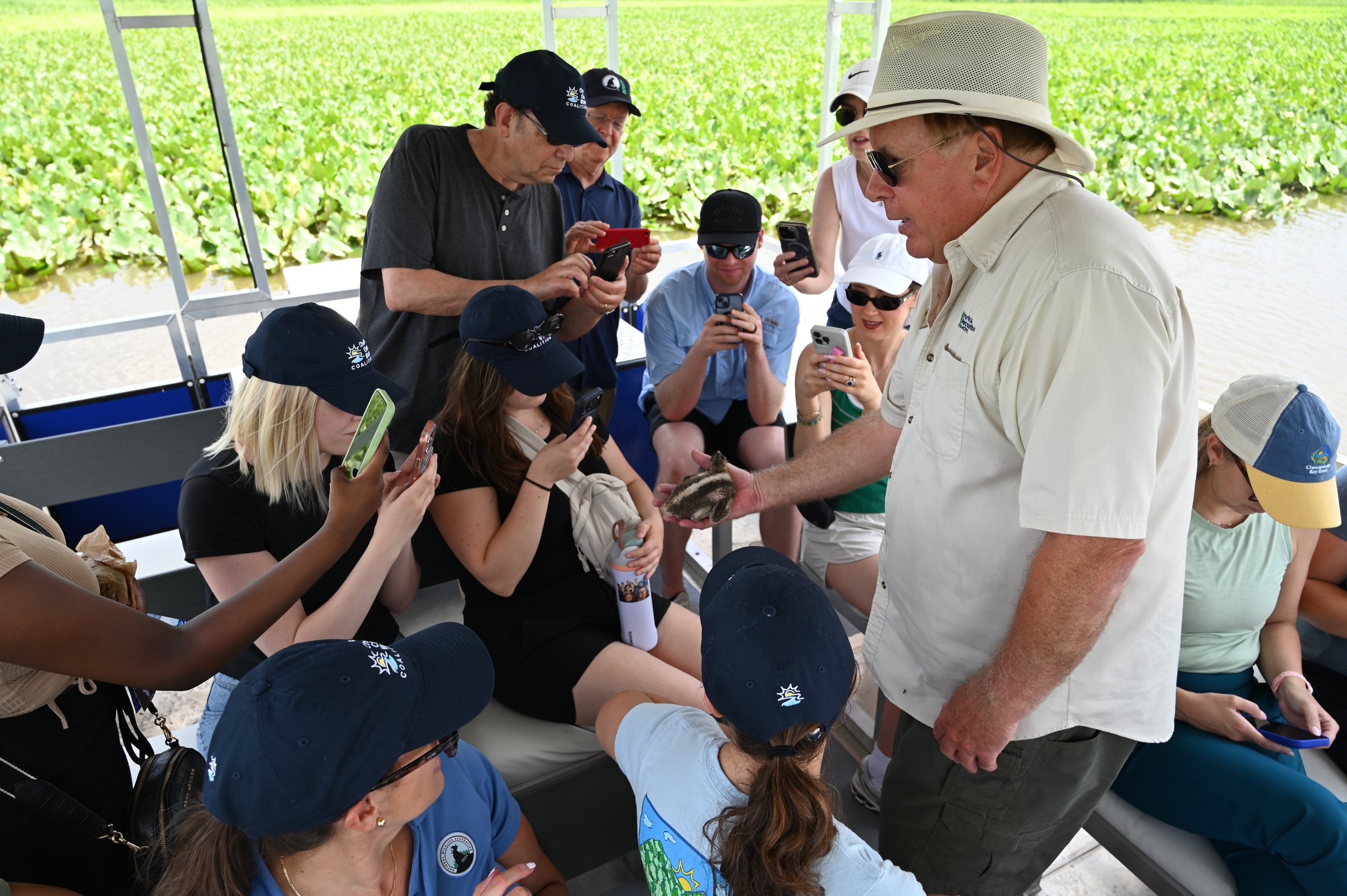
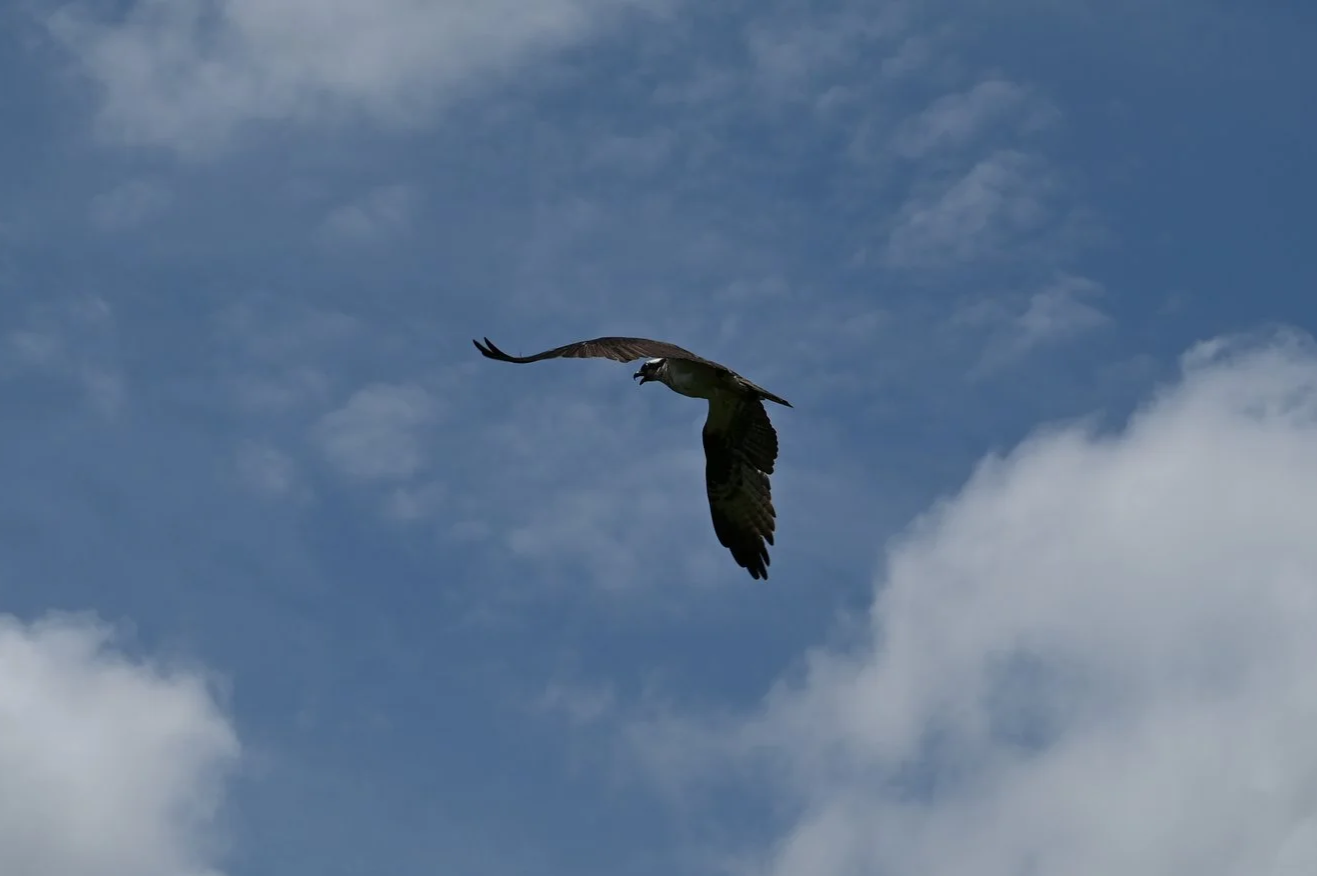
As it’s talons gripped my arm, I was grateful it was only a chick. The osprey, about two months old, was calm, despite the speed of its heartbeat feeling like mine after sprinting up a hill. For many of us, it was a bucket list item to get so close to a bird we had admired from afar for many years.
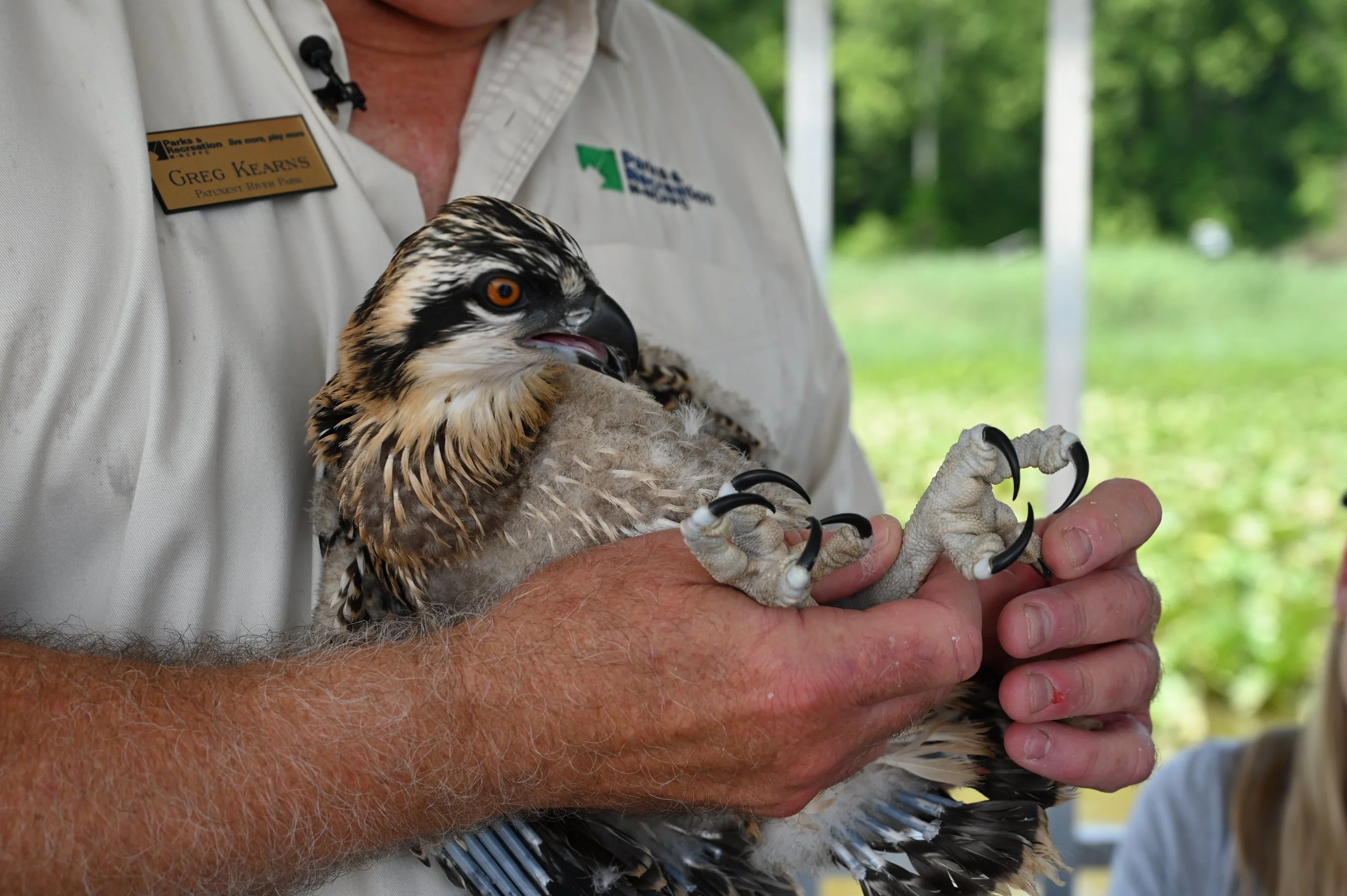
Naturalist Greg Kearns shows a young osprey’s talons.
Last month, the Coalition staff and a group of our supporters ventured to Patuxent River Park to get an up-close look at the ospreys that call it home and learn about the challenges they are facing. We were privileged that Greg Kearns, naturalist at Patuxent River Park, led our tour. With more than 40 years of experience at Jug Bay, Kearns is a fountain of knowledge and a walking encyclopedia on the flora and fauna of the area. And no critter has captured him quite like the magnificent osprey.
A Beloved Bird
The Chesapeake Bay region is far from the only area that ospreys call home, as this raptor is one of the most widespread birds in the world. But while blue crabs and rockfish get most of the notoriety as hallmark Bay critters, the osprey is arguably its most beloved flying resident. According to the Chesapeake Bay Program, historically the Chesapeake Bay has supported the largest concentration of breeding ospreys in the world.
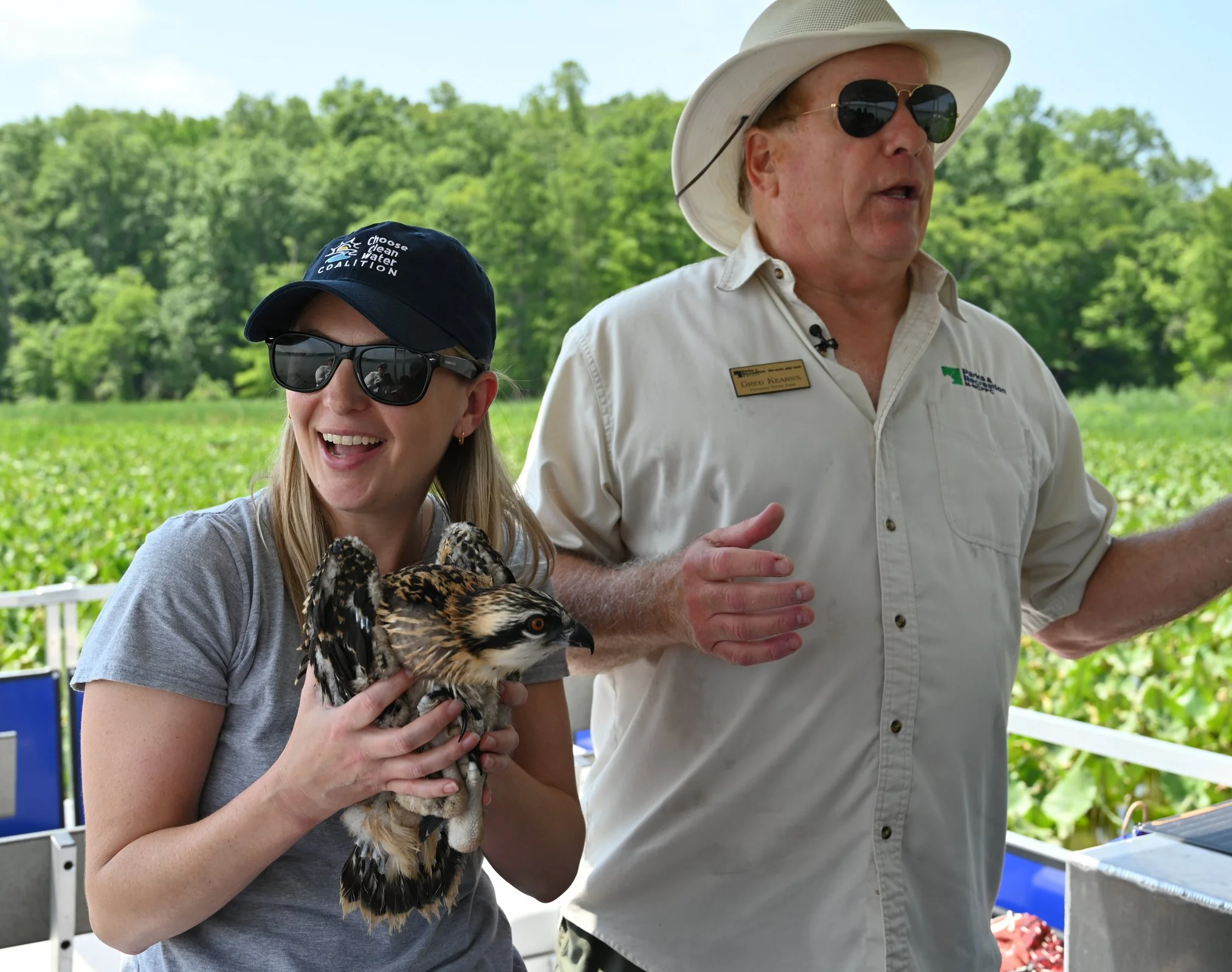
Coalition Director Kristin Reilly holds a young osprey alongside naturalist Greg Kearns.
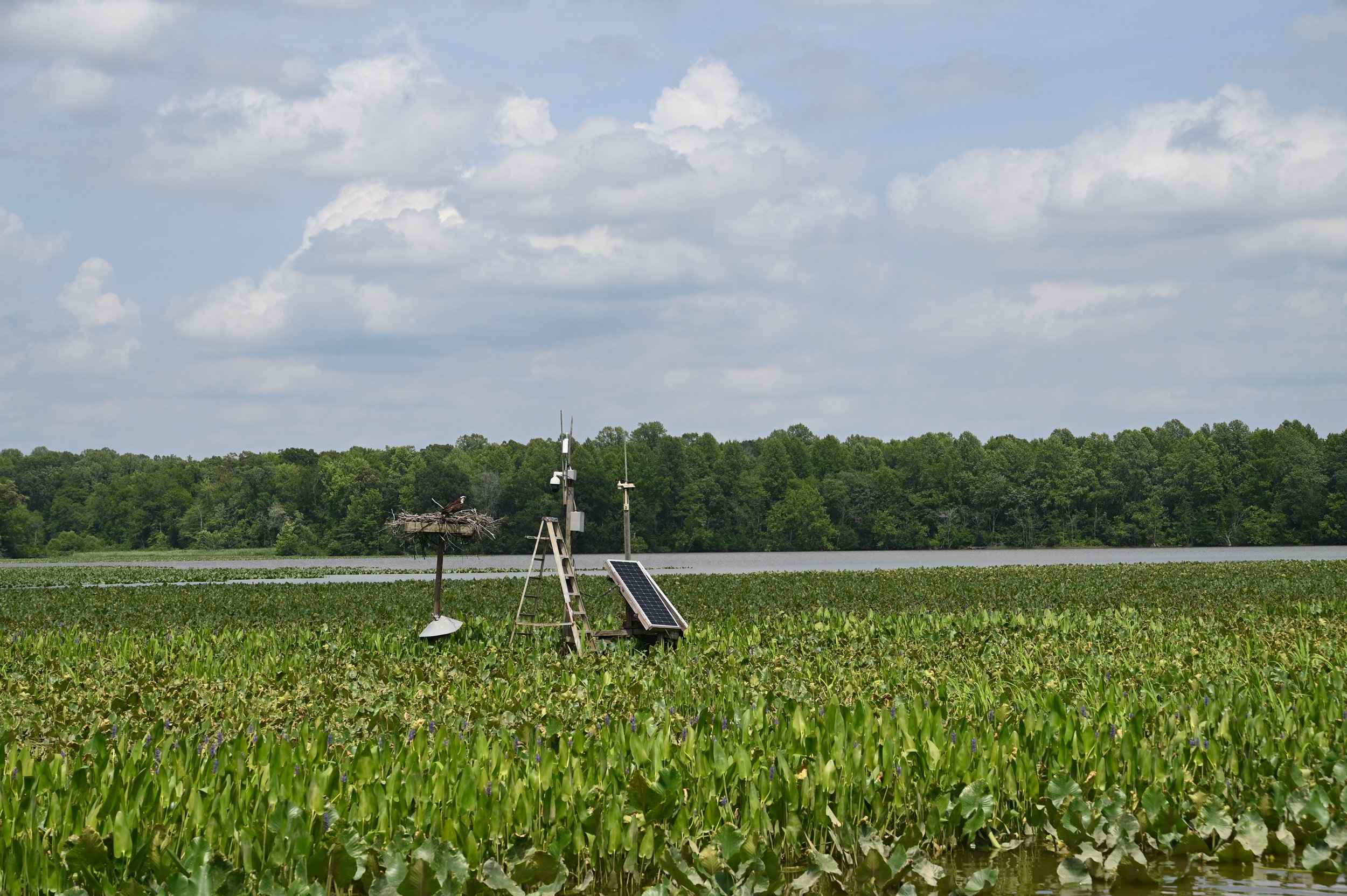
Around March every year, its familiar chirp returns to the Bay, marking the unofficial end of winter and beginning of spring. Osprey nests, often found on utility poles, channel markers, and other platforms near water await the bird’s return. With ospreys mating with the same partner for life and often returning to the same nest, many people look forward to welcoming “their” ospreys home and following them throughout the summer. Even for those not near water, several osprey cams provide a front-row seat to the life of these fascinating birds.
Increasingly, however, scientists and amateur birders alike are noticing something is wrong with the Bay’s ospreys.
Warning Signs
For scientists studying ospreys, they are observing an alarming trend: fewer osprey chicks surviving and reaching adulthood. Research shows that to have a sustainable population, ospreys need a reproductive rate of 1.15 chicks per active nest or greater. In 2024, the reproductive rate of ospreys dropped to less than 0.6 chicks.
How serious is the current crisis? The reproduction rate for ospreys in the Bay is now lower than it was at the height of the DDT crisis back in the 1960s.
While the decline in ospreys is clear, the exact causes are much muddier.
There are several threats to blame for the falling osprey numbers. Some common culprits include extreme weather due to climate change, loss of food sources due to invasive species such as blue and flathead catfish, and habitat degradation. And in certain areas, large-scale industrial fishing is also impacting osprey populations.
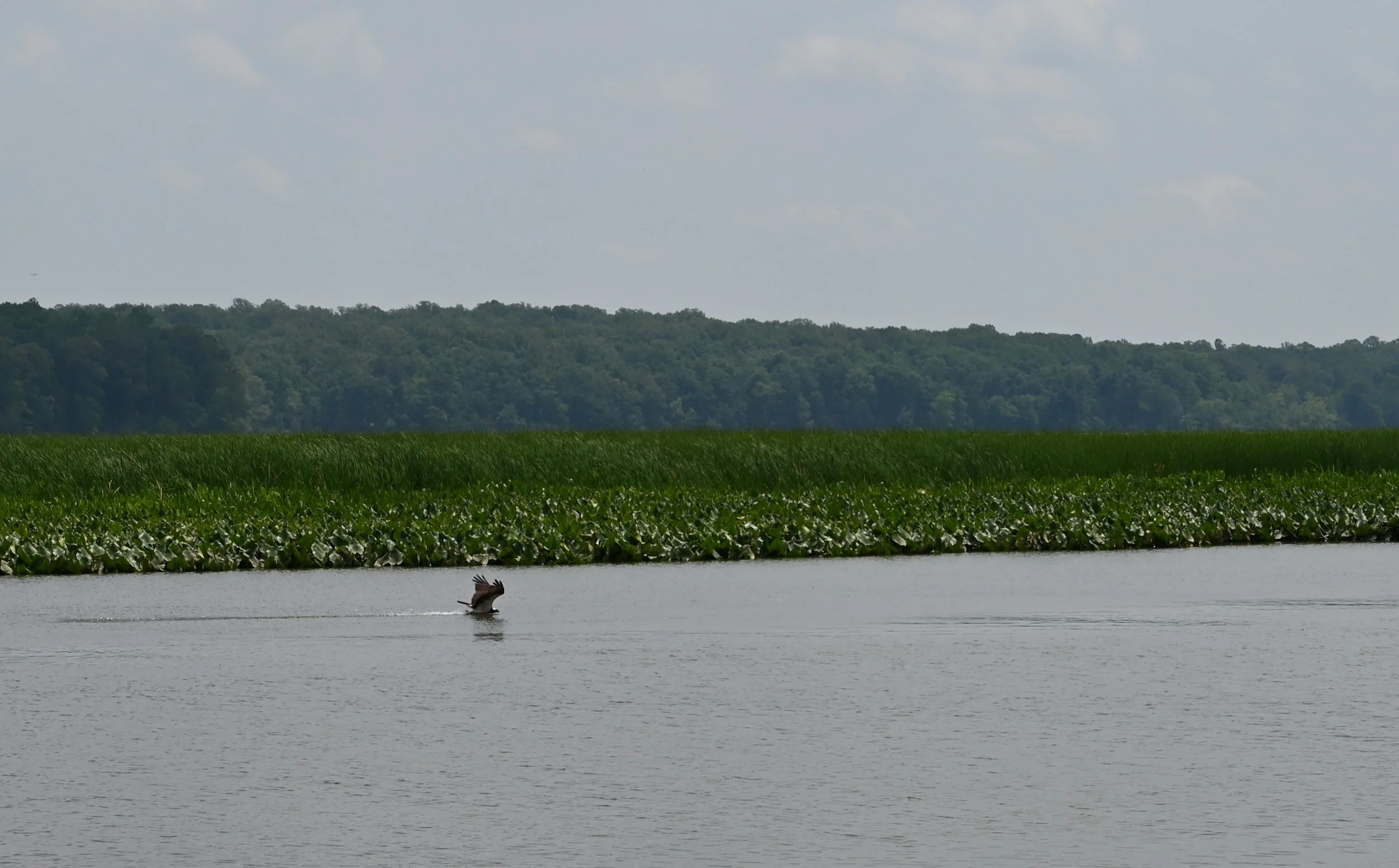
One of the wonders of ospreys is watching them hunt. Feeding almost exclusively on fish, ospreys use their remarkable vision to hunt for food flying high above the water. But more and more, there are less fish for ospreys to catch.
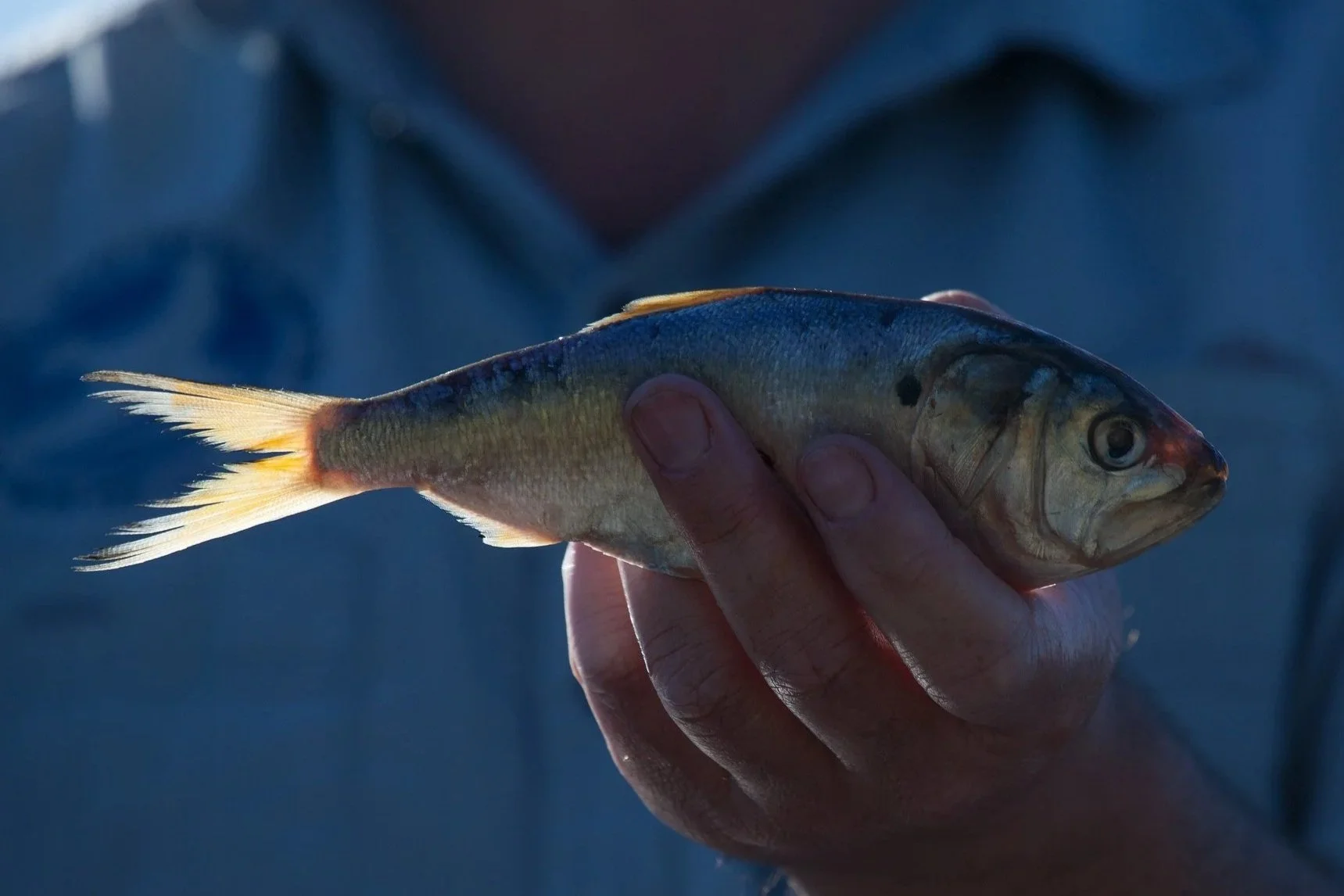
Atlantic menhaden is a key food source for the Bay’s ospreys. Photo by Will Parson/Chesapeake Bay Program.
At the center of the issue is the mighty menhaden. Often called “the most important fish in the sea,” the oily, calorie-dense fish is a critical pillar in the Bay’s food chain and a critical food source for ospreys. And while it’s not featured on dinner plates, menhaden are targeted by commercial fisheries for their multiple uses, making their way into everything from pet food to cosmetics.
It’s perhaps no surprise, then, that ospreys in the lower, saltier portion of the Bay, where menhaden constitute most of their diet, are struggling more than their fellow ospreys further north. This is according to Bryan Watts, a leading scientist on osprey from William & Mary University’s Center for Conservation Biology.
Advocating for Solutions
The Atlantic States Marine Fisheries Commission (ASMFC) oversees the management of the Atlantic menhaden fishery in our region. For years, the Coalition and many of its member organizations have advocated for policies based on the latest science to protect and conserve the menhaden population. And this advocacy continues.
There is a great need for updated data regarding Atlantic menhaden populations in the Chesapeake Bay. The Coalition advocated for $2.7 million from Congress in FY26 to support a new Atlantic Menhaden Abundance Survey. Funding was included for this study in a minibus appropriations package that Congress passed in January 2026. We were also pleased to see Governor Abigail Spanberger (D-VA) include a budget amendment for $2 million to support this survey. Moving forward, the Coalition is advocating for a 50 percent reduction of the Chesapeake Bay fishery cap for Atlantic menhaden and distributing the harvest under the cap more evenly throughout the fishing season.
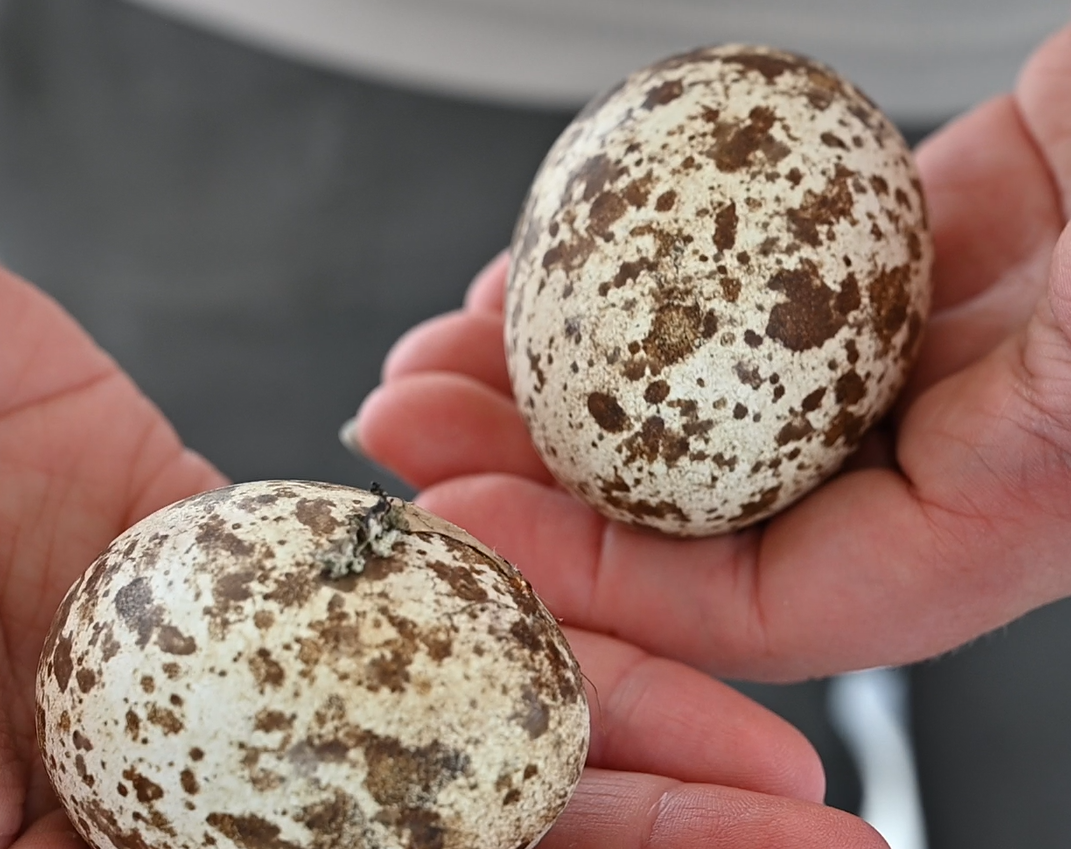
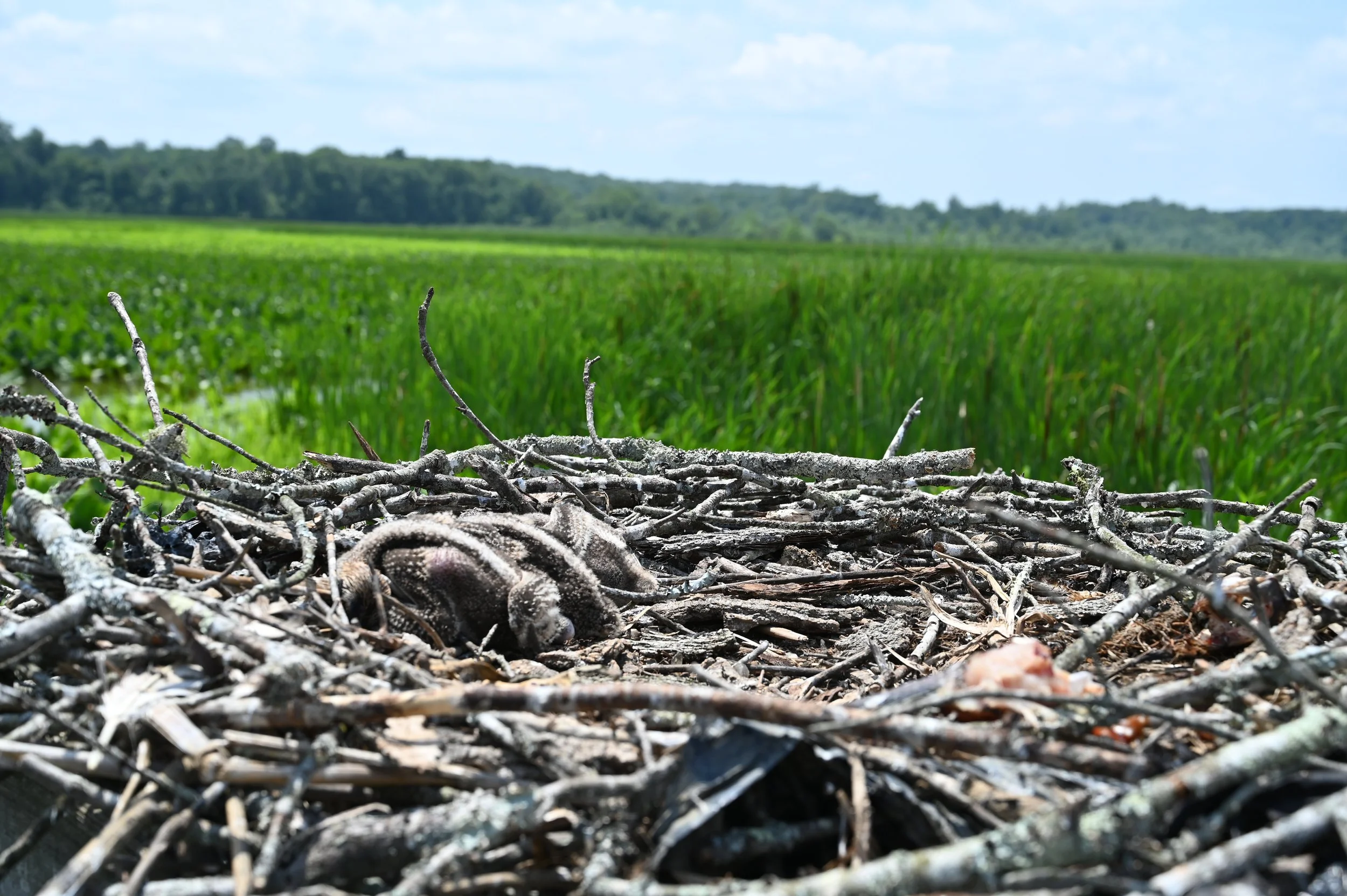
Osprey eggs that failed to hatch.
Hitting Home
Motoring through Jug Bay, we saw even younger osprey chicks, as well as a few osprey eggs that failed to hatch. As we headed toward the docks, the conversation on board turned to solutions.
While no single action will save the Bay’s ospreys, we can make a difference. Despite the challenges, my encounter with these birds left me hopeful, fueling a greater admiration for their resilience and tenacity. Perhaps more importantly, the experience fed a growing desire and sense of urgency to advocate for ospreys.
And you can join us. Donate today to support the Coalition and its work for ospreys and clean water throughout the Chesapeake Bay region. Together, we can conserve and protect our most precious resources and critters for generations to come.
Photos by Drew Robinson/CCWC Staff unless otherwise indicated.
