
Delaware Enacts Historic Freshwater Wetlands Protections
It only took 38 years.
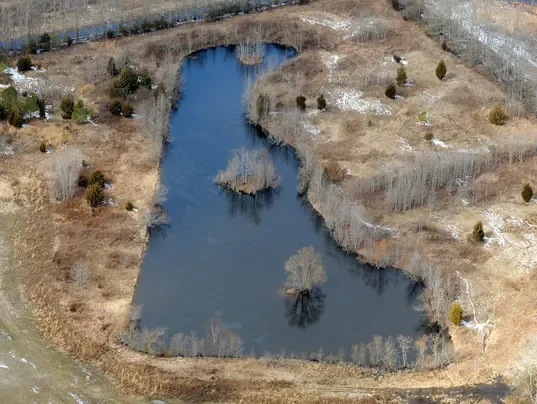
In Kent County, Delaware, a man-made pond by the U.S. Department of Agriculture’s Natural Resources Conservation Service provides critical habitat. And with a birds-eye view, looks like the First State! Photo by Gary Emeigh, The News Journal.
Under The Wetlands Stewardship Act of 2026, Delaware has finally created its own protections for freshwater wetlands. The measure passed with nearly unanimous bipartisan support during the final hours of the 153rd General Assembly on July 1.
The timing was critical. For nearly four decades, The First State was the only state in the region without local safeguards for freshwater wetlands. It relied instead on the U.S. Army Corps of Engineers to regulate them under the provisions of the Clean Water Act. When the EPA removed freshwater wetlands across the county from federal jurisdiction in 2023, 75,000 acres of freshwater wetlands in Delaware were left high and dry, totally vulnerable to degradation or destruction.
The Wetlands Stewardship Act will safeguard against losses by folding a new permitting program for freshwater wetlands into the established program for management of tidal wetlands. It continues to allow activities currently authorized under the U.S. Army Corps of Engineers’ General Permit Program while exempting some common, low-impact activities. Permit applications will require a wetlands delineation performed by a professional. A higher level or review will be required for wetlands that are unique or high functioning, provide habitat for threatened or endangered species, contribute to drinking water supplies, or lie within state-designated natural areas.
“This is a win for all parties involved,” said Mark Nardone, Director of Advocacy for Delaware Nature Society. “The development and business community gets regulations it can rely on for planning and a dependable timeline for review of permit applications, farmers can continue established practices, and environmentalists can rest assured that critical habitat and water quality will be protected.”
Nardone notes that seven past attempts to enact similar legislation had failed since 1988.
“The real reason for the bill’s success is strong leadership and an inclusive, transparent process,” he said. “For two years, Senator Stephanie Hansen convened regular meetings of stakeholders with diverse interests to talk it out. Those discussions were open to all. Every voice was heard and respected, which is tremendously important, and everyone appreciated that everyone else gave a little something to draft a bill that would work. What was achieved here—long overdue state-level protections—is historic.”