
Photo Essay: How the Next Generation of Oysters is Helping the Bay
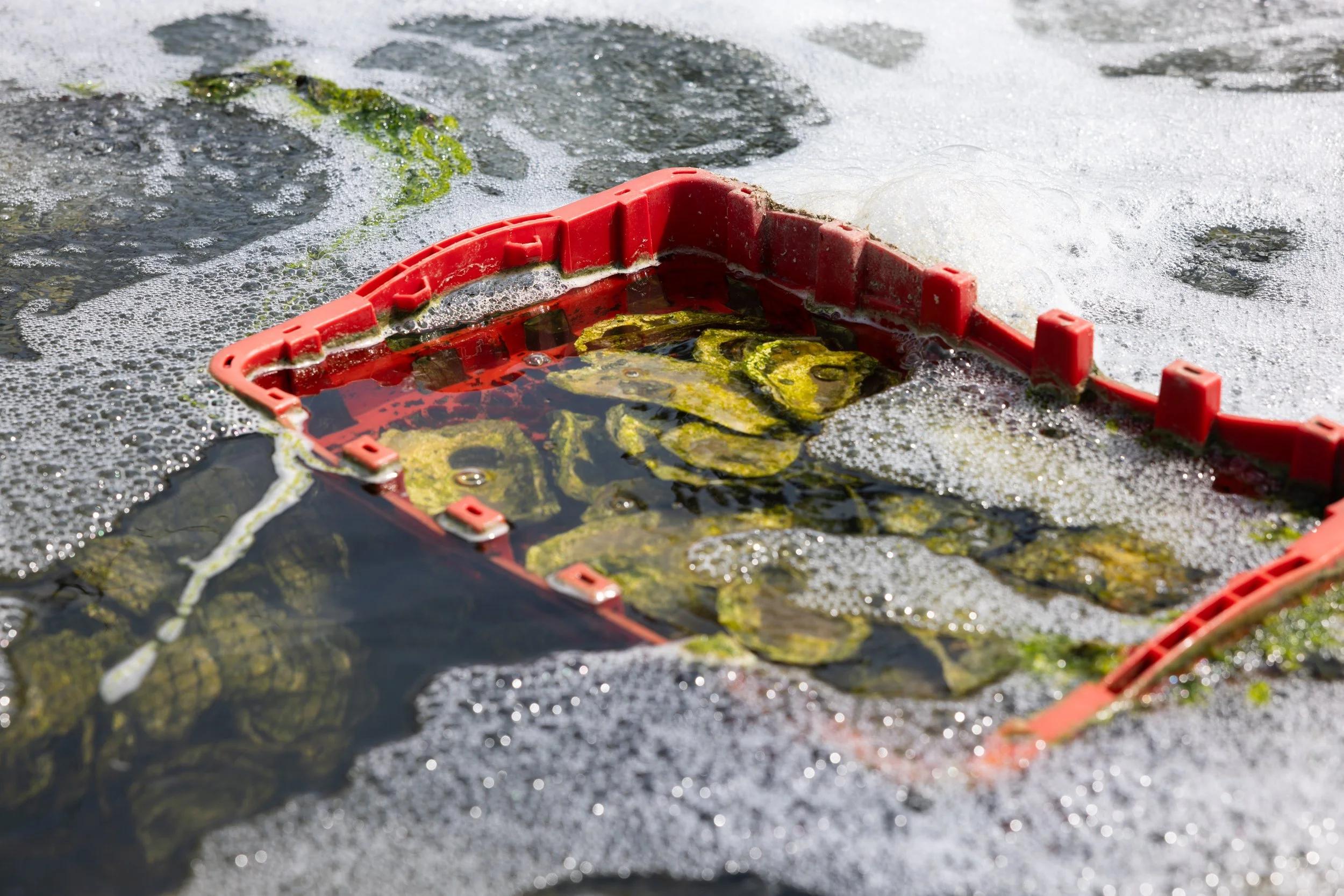
Water flows over oysters at Piney Point Aquaculture Center, in St. Mary’s County, Maryland. The oyster hatchery and nursery raises oysters to support habitat restoration projects and the aquaculture industry around the bay. Oysters are filter feeders, relying on a constant flow of water to supply algae and other nutrients.
The Chesapeake Bay is home to the eastern oyster, a type of bivalve found along the coast from Canada to Florida. An estimated 12 billion oysters live in the Chesapeake Bay’s Maryland waters alone. Historically, the bay’s oyster population experienced declines due to habitat loss, overharvesting, and disease.
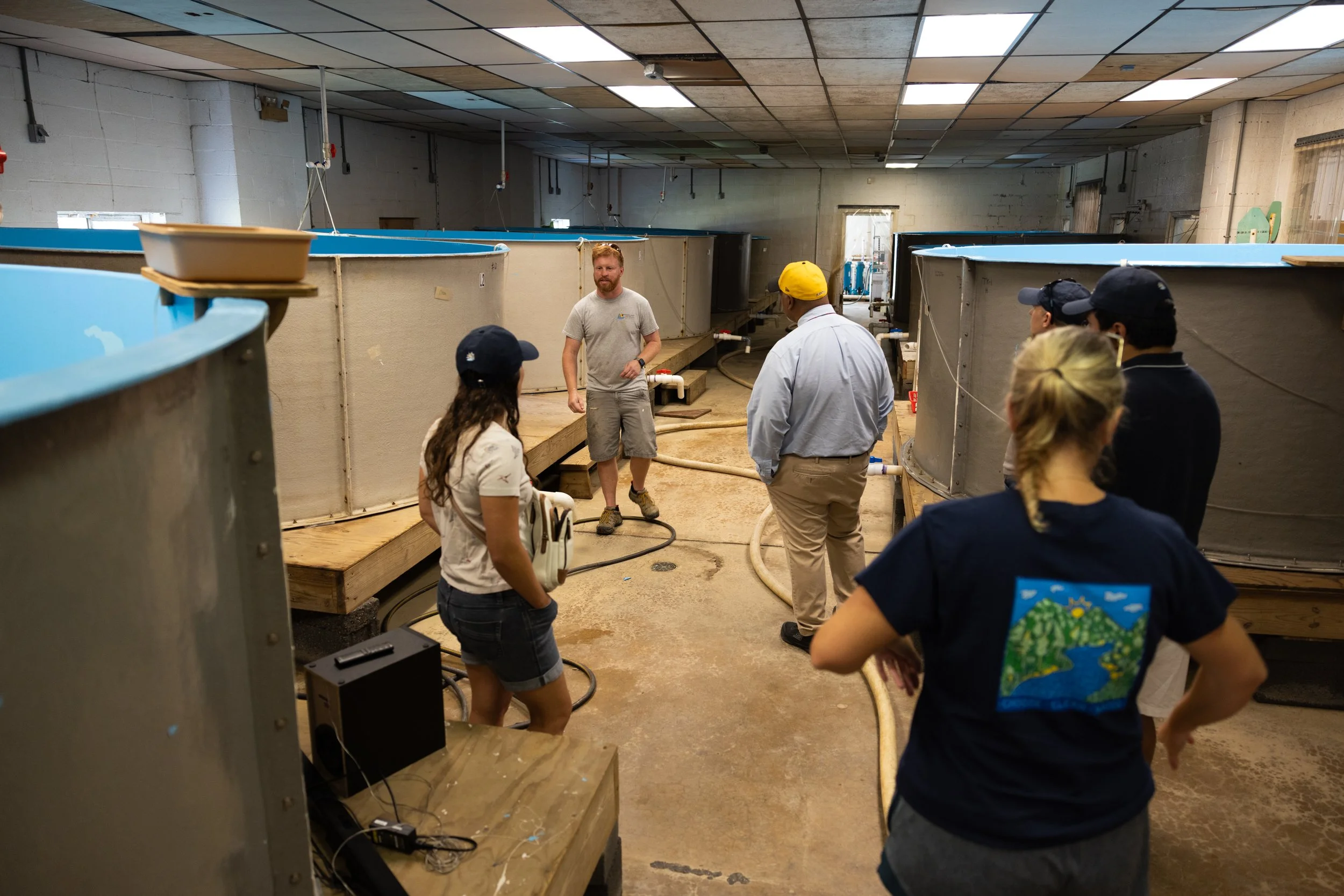
James Dumhart leads Coalition staff through the hatchery’s tank room. After carefully selecting broodstock oysters, those chosen to parent the next generation, the hatchery sets conditions to mimic natural spawning. Once fertilized, the larvae bond to tiny shell pieces before being transferred to larger tanks.
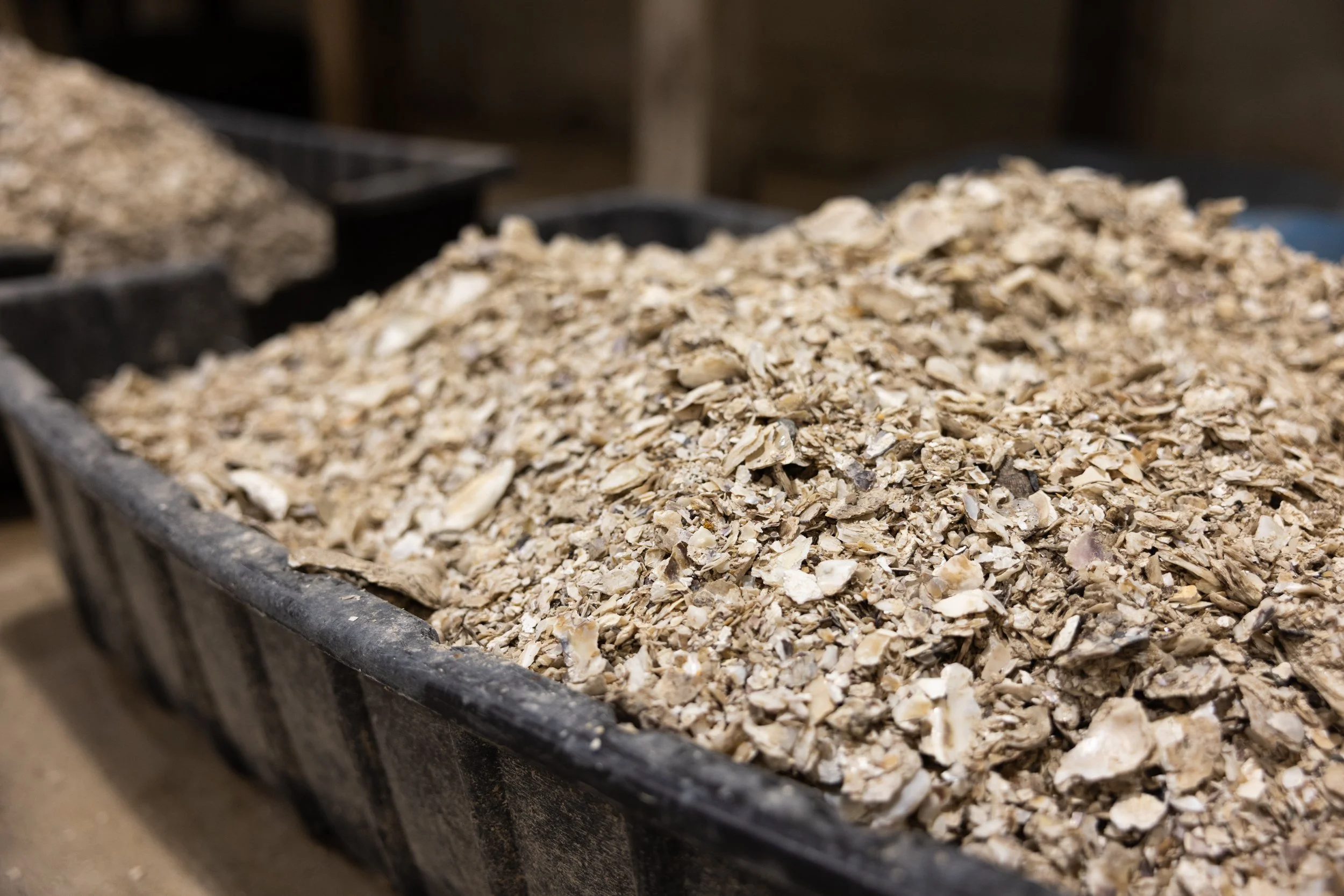
The hatchery uses fine oyster shells to bond with larvae, marking their transition to juvenile oysters. In recent years, oyster shells have become harder and harder to supply. The historic decline in oyster populations combined with new uses for shells present a challenge for hatcheries that need shells for larvae.
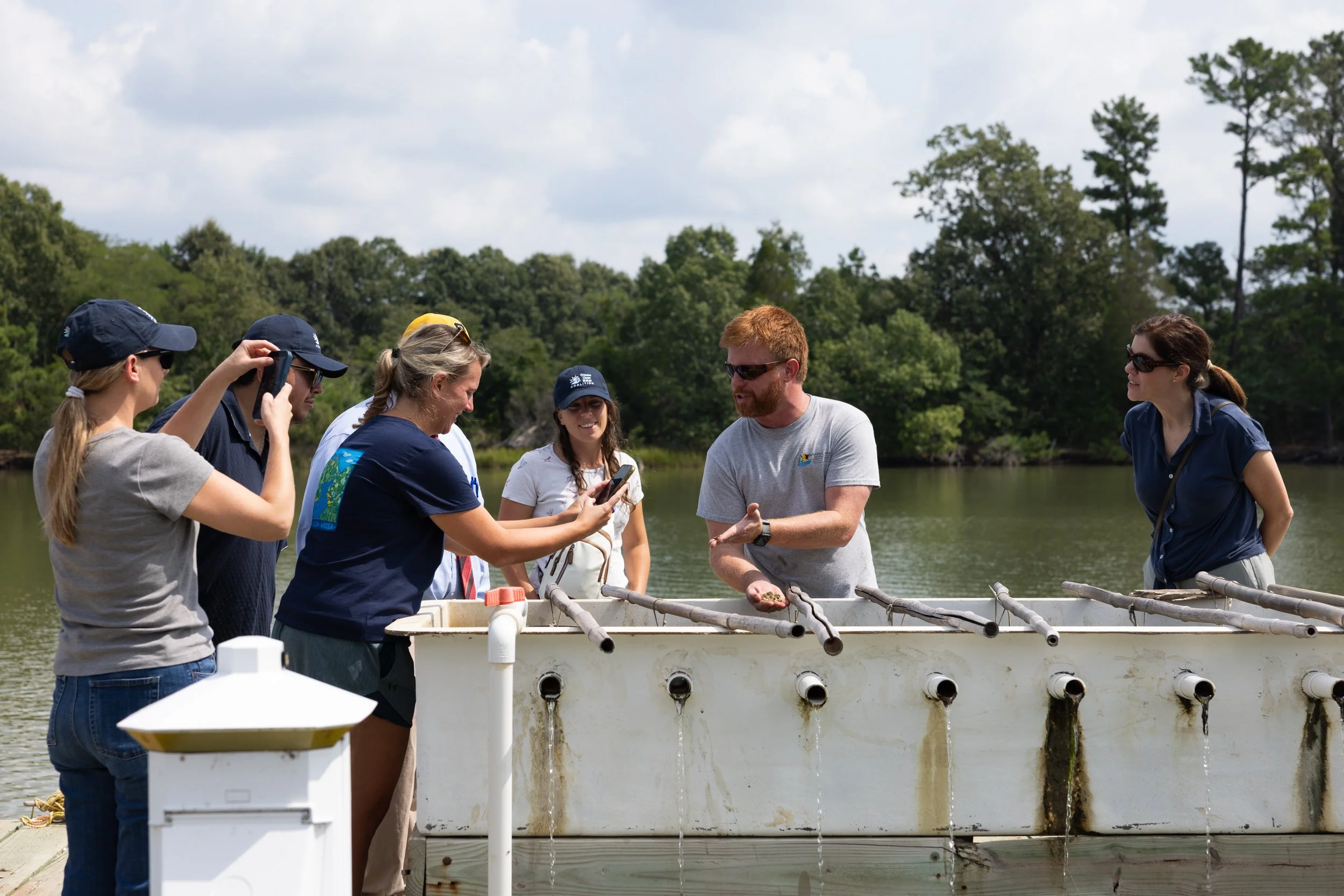
After spending time in the hatchery, juvenile oysters called spat are transferred outside to the nursery where water from the river is pumped into troughs.
Aquaculture centers focused on oysters cultivate two types: diploid and triploid oysters. Diploid oysters are naturally occurring oysters with two sets of chromosomes. Triploids are typically a product of oyster aquaculture, having three chromosomes, although they can occur naturally in rare circumstances. Triploids are sterile and grow faster than diploids, making them popular for hatcheries.
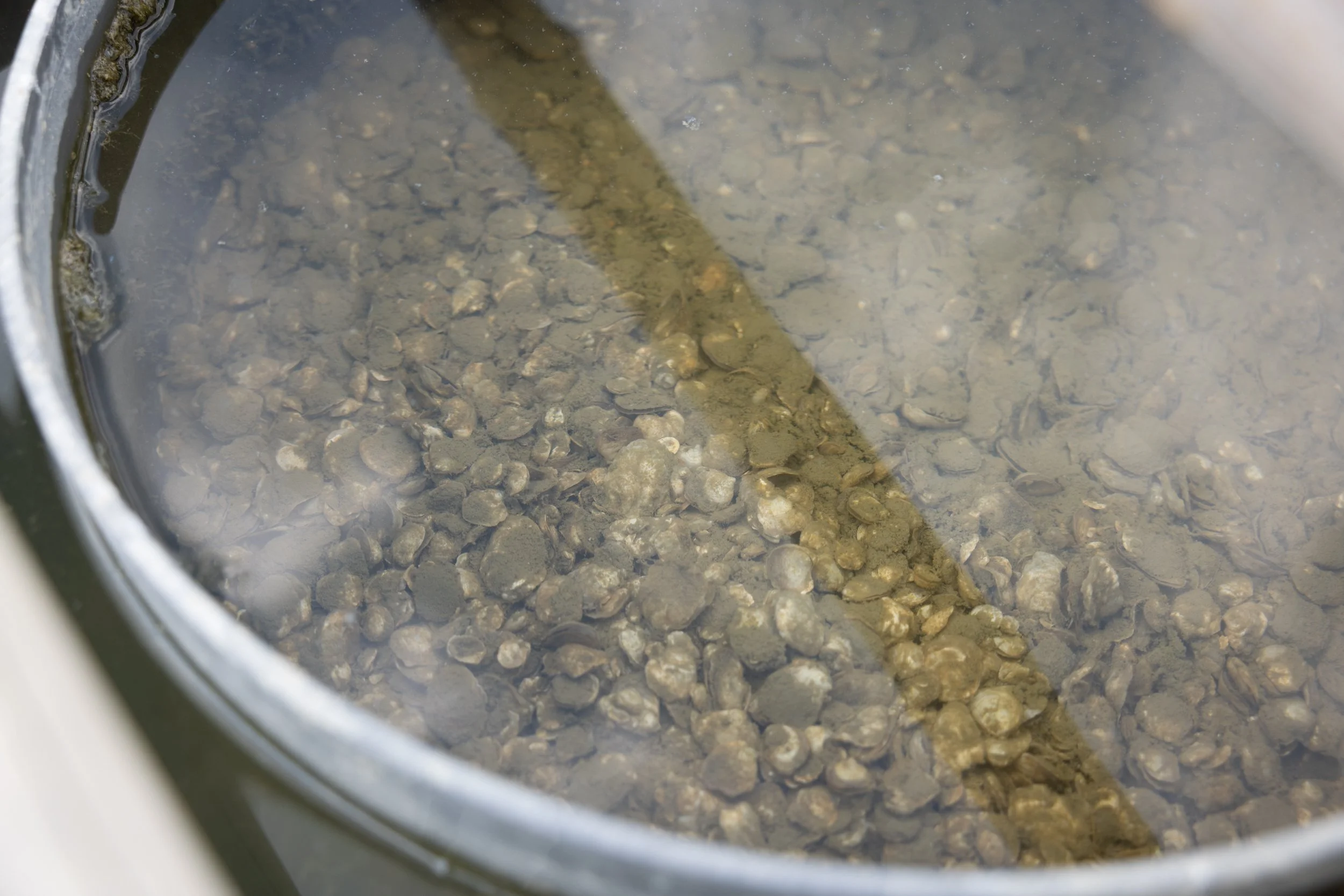
Water flows upward through the mesh and back out into the river, providing a constant flow of nutrients for growth. Oysters are natural filters. They remove algae, sediments, and pollutants from the ecosystem, helping keep the bay clean.
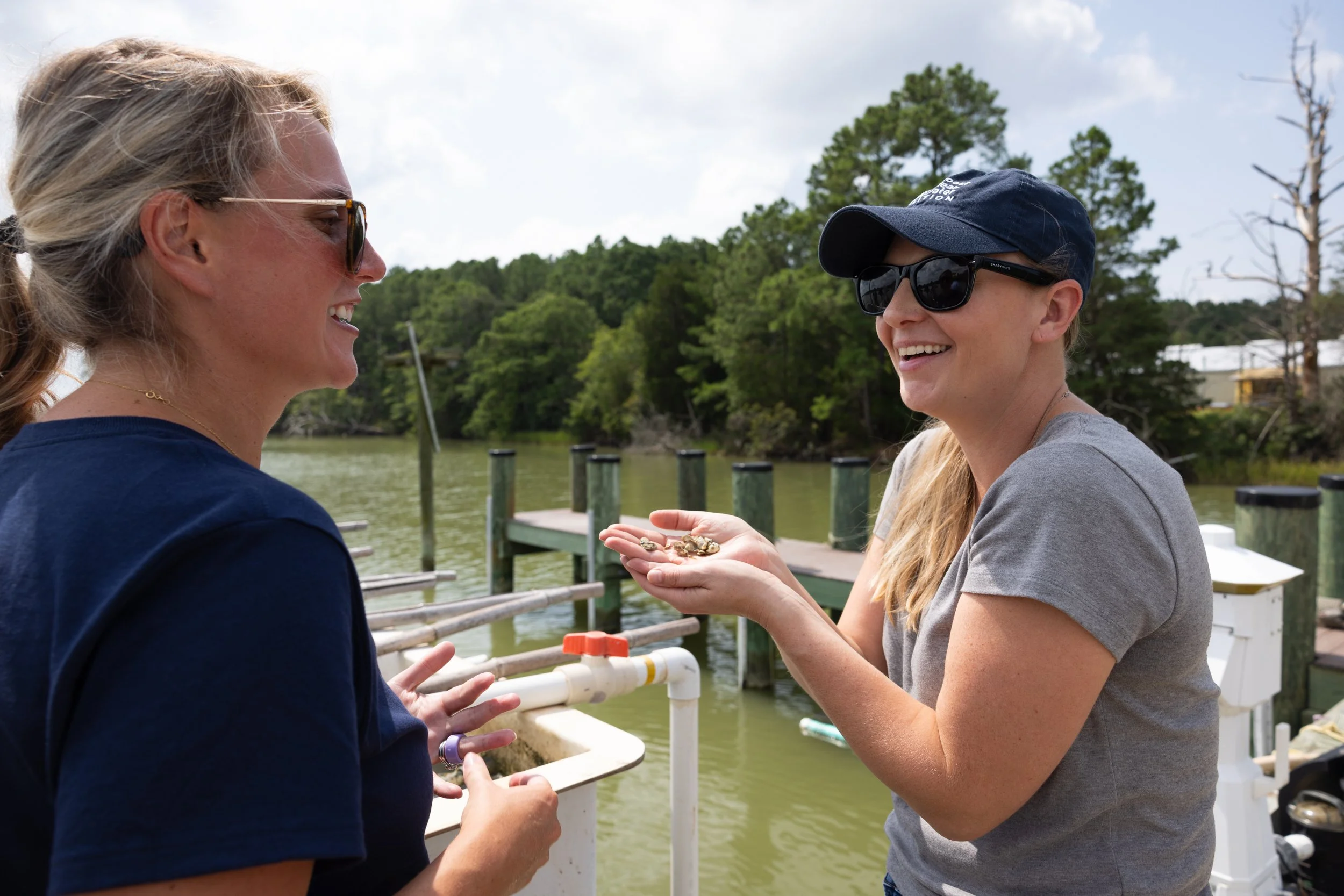
Kristin Reilly and Sara Ramotnik from the Coalition take a closer look at the juvenile oysters.
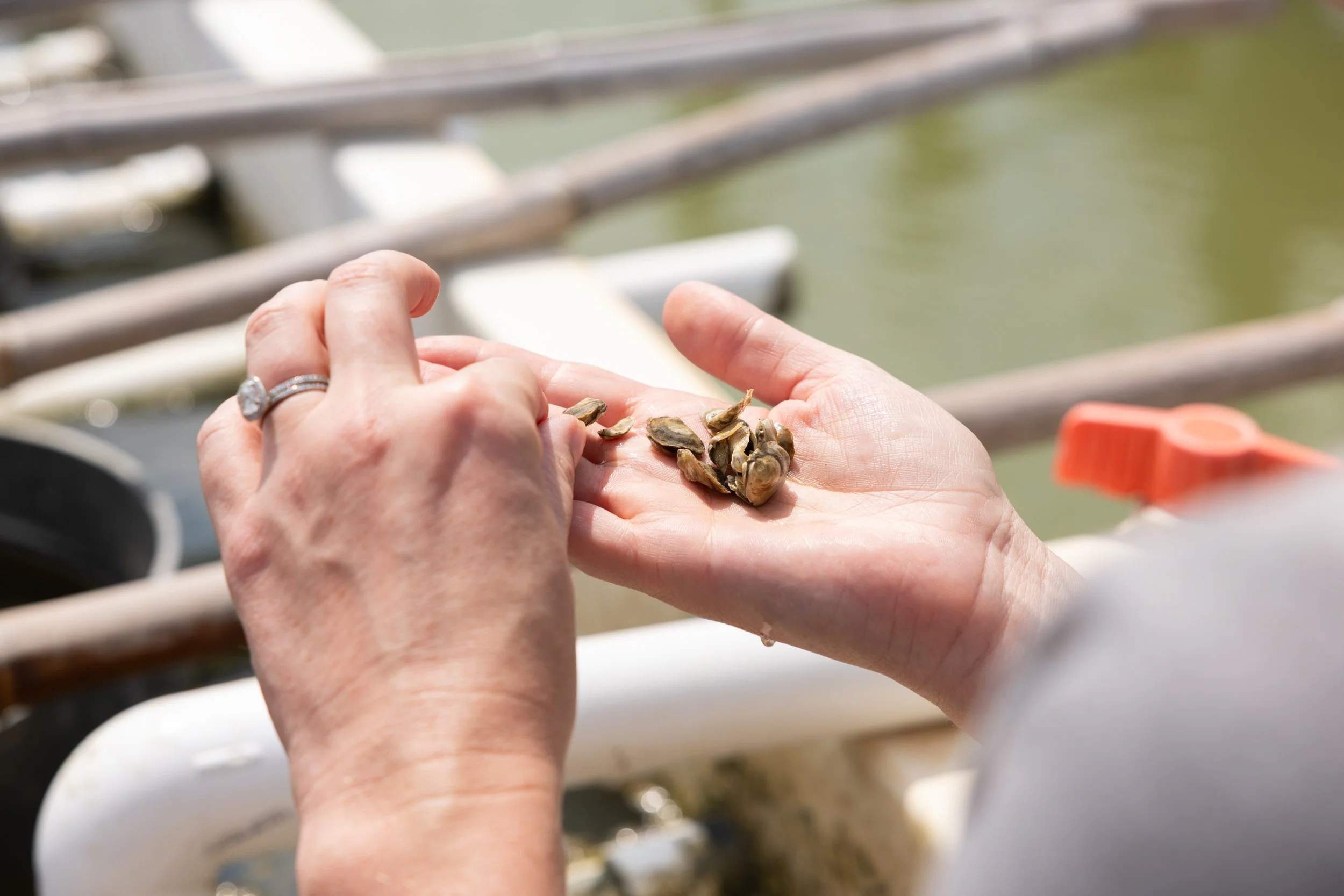
These spat still measure less than an inch. After a couple months, the oysters are big enough to transfer to grow-out bags or cages.
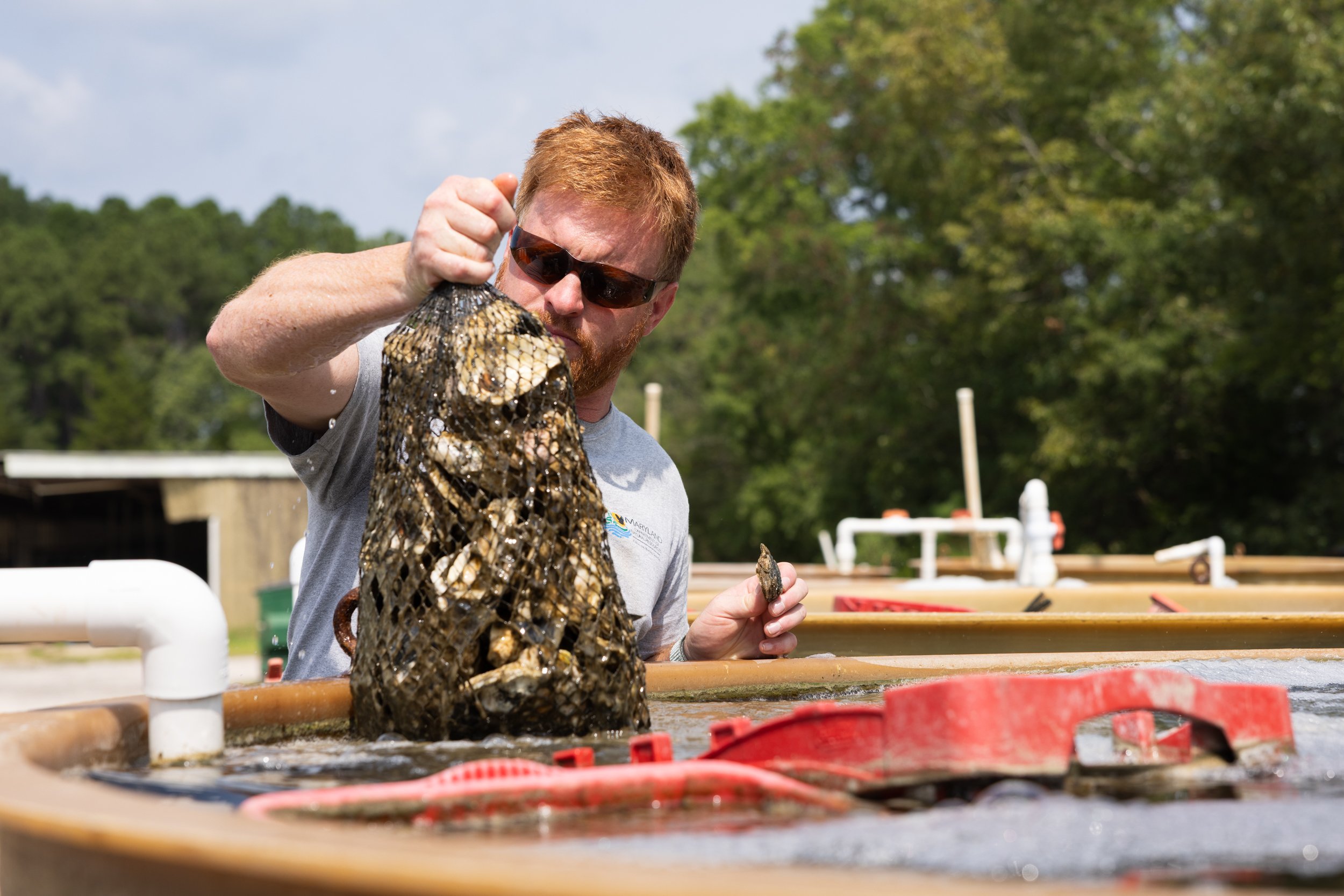
James Dumhart pulls a mesh grow-out bag full of oysters from the water. Oysters continue to grow, reaching maturity at roughly three years of age or when they’re 3 inches.
Oysters provide essential habitat for other species in the Chesapeake Bay. Restoration efforts have focused on reestablishing oyster reefs, which are not only important for maintaining the bay’s oyster industry but other fisheries as well.
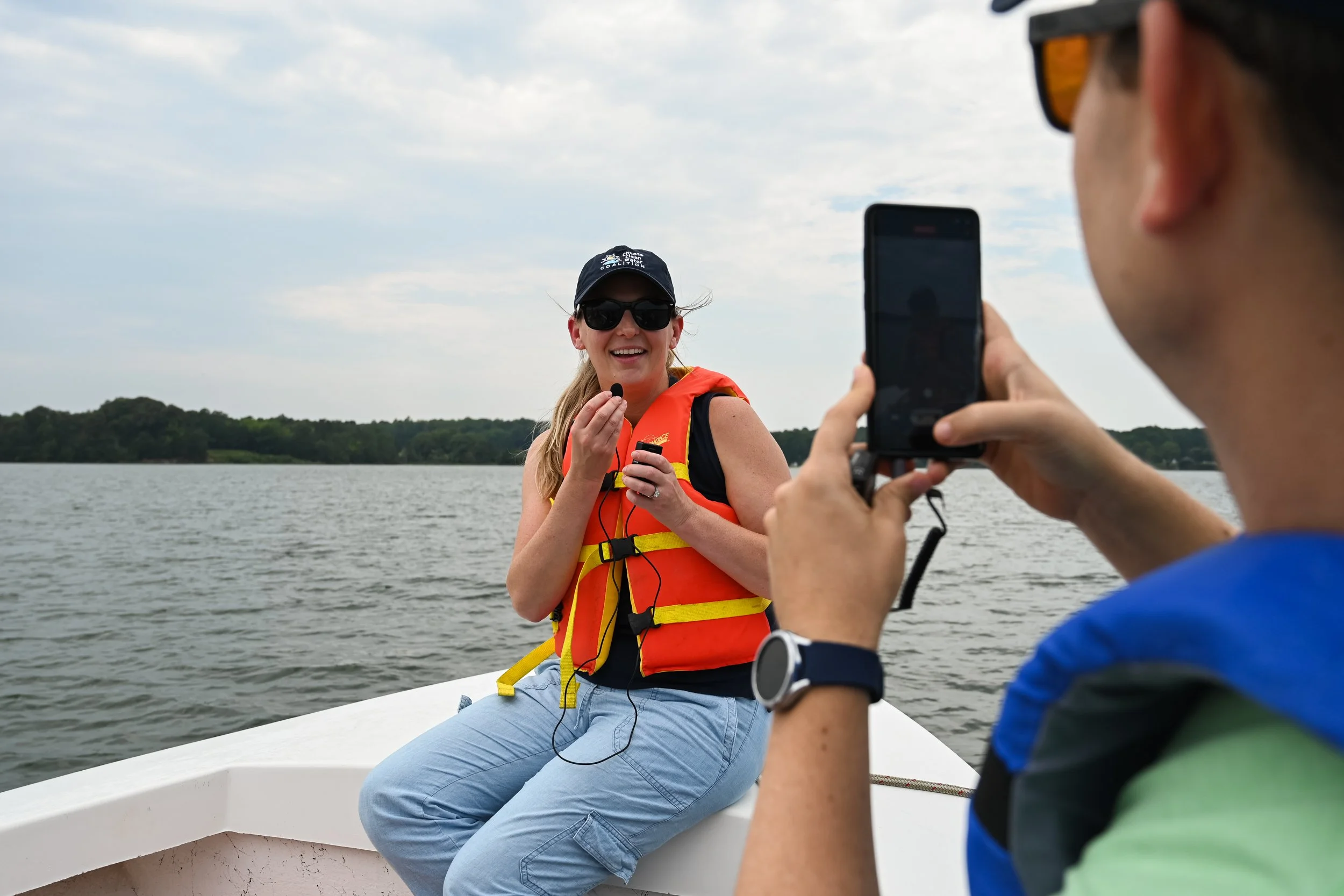
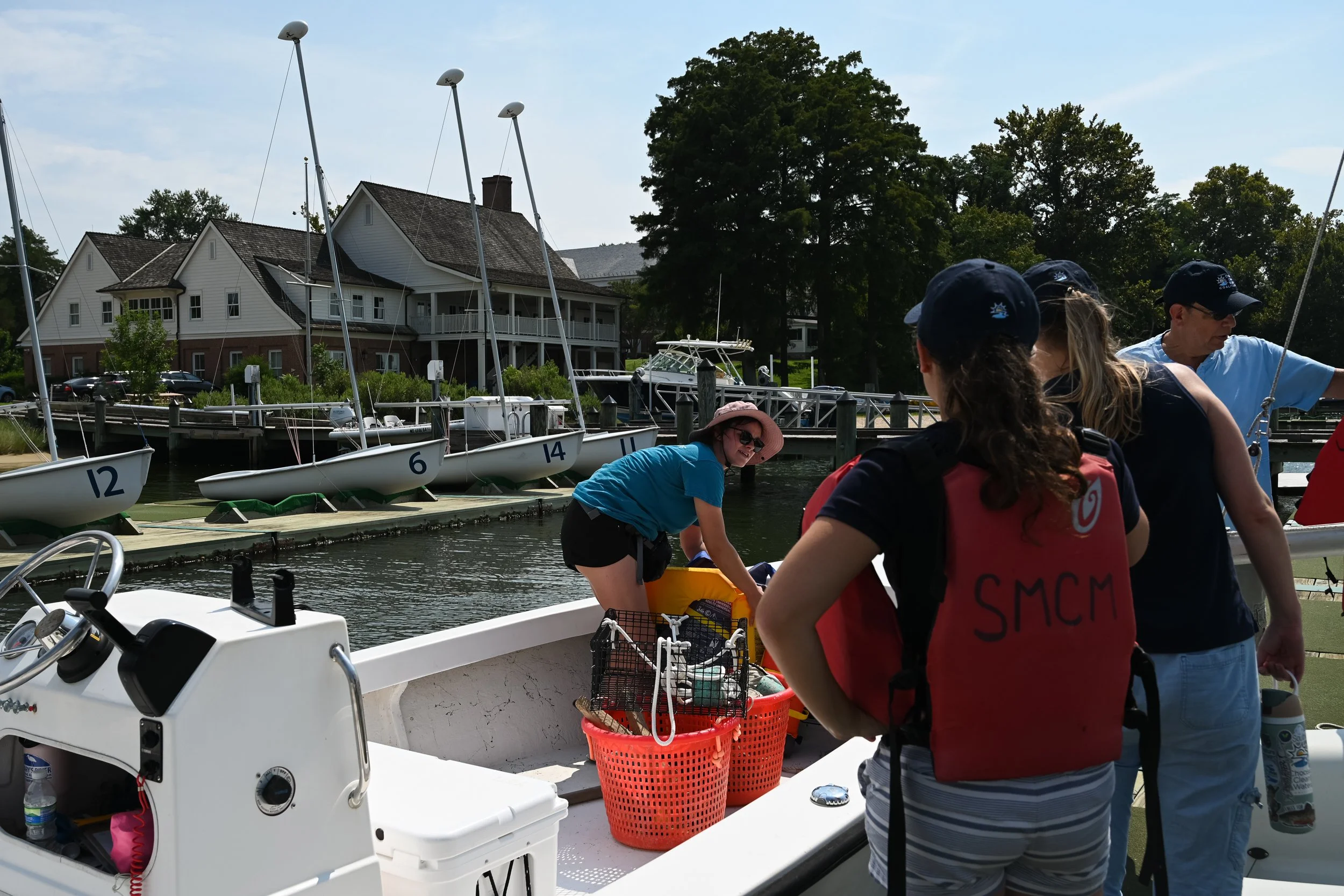
Coalition staff tour the St. Mary’s River, which is the site of an ongoing oyster restoration effort, with the St. Mary’s River Watershed Association. In 2014, the Chesapeake Bay Watershed Agreement included a goal for the restoration of oyster populations in 10 tributaries across Maryland and Virginia, including the St. Mary’s River.
Since efforts began, the river has experienced an increase in juvenile oysters spawning in the river and clearer water. The St. Mary’s River Watershed Association continues to monitor the oyster population and support restoration projects.
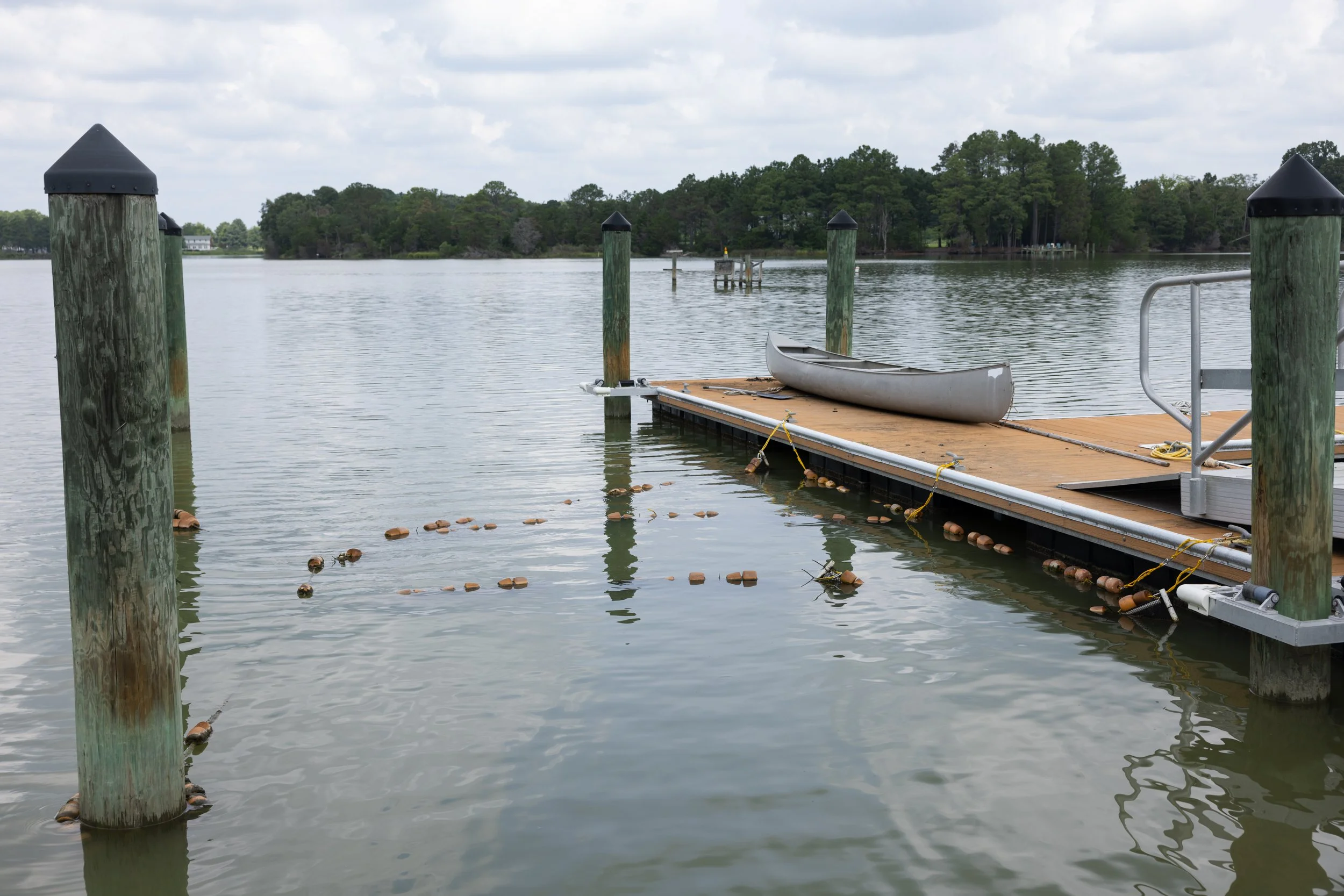
Although the oyster population has rebounded from historic levels, restoration efforts continue to be a focus in the bay. Oyster hatcheries, like Piney Point Aquaculture Center, are integral to maintaining a steady population of oysters for these projects and the aquaculture industry.
For another look into our trip to Piney Point Aquaculture Center, check out this short video: