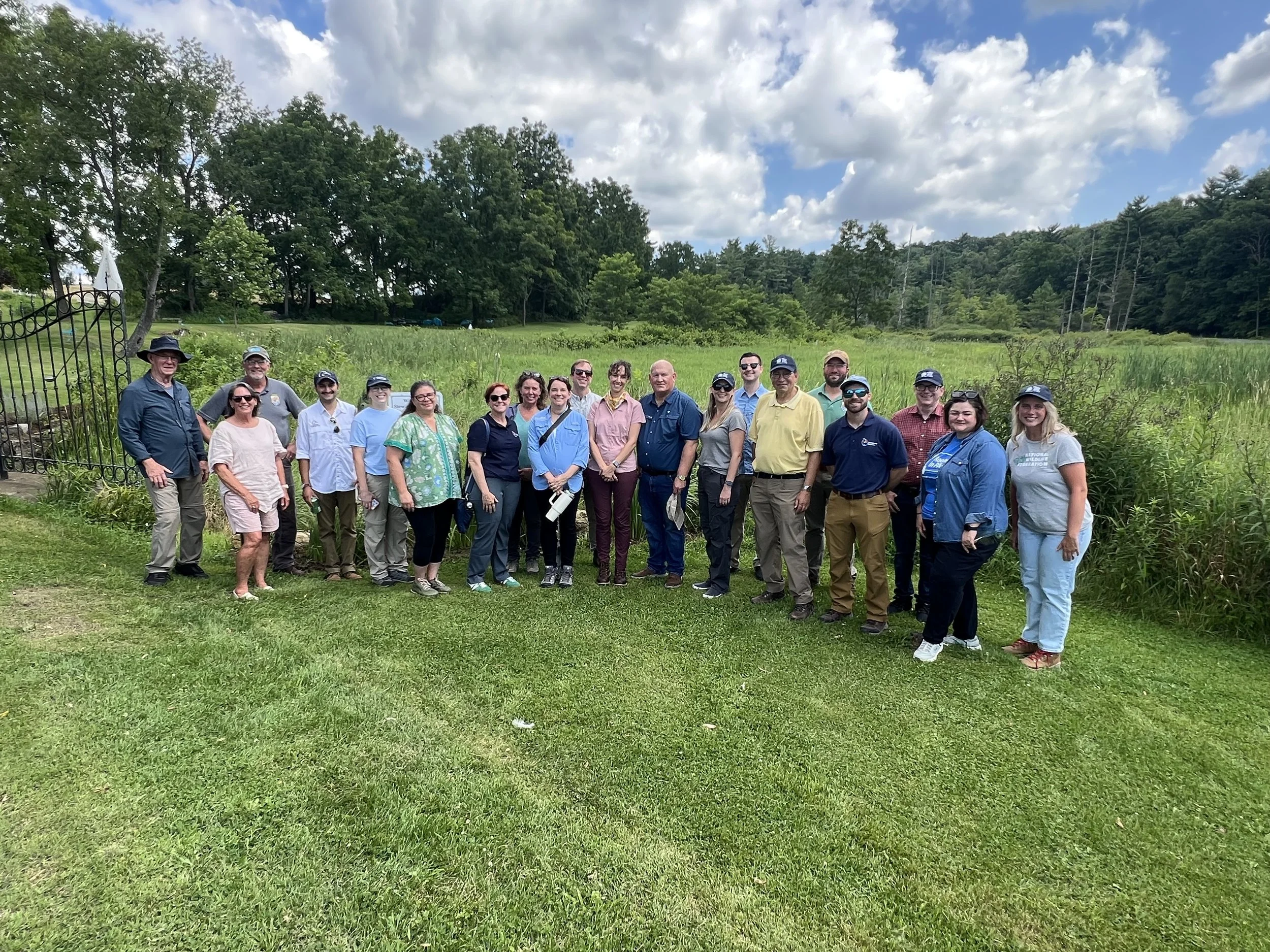
It was a picture-perfect summer day in the Spruce Creek watershed in Centre County, PA. Fourteen Choose Clean Water Coalition members and staff were joined by folks from the National Fish and Wildlife Foundation, Centre County Conservation District, Chesapeake Bay Commission, and the U.S. Fish & Wildlife Service to host Congressman GT Thompson (R-PA) for project tours around his district. The purpose of the day was to meet local farmers and tour conservation projects on their land that made their operations more efficient, their cattle healthier, and the local waterway cleaner. That waterway is Spruce Creek, a renowned trout fishery that needs cool, clean water flowing into it to remain so.
All of the farms we visited had projects that were at least partially funded by EPA Chesapeake Bay Program funds, through either the Chesapeake Small Watershed Grants Program (SWG) or the Innovative Nutrient and Sediment Grant (INSR) Program. These grant programs are funded annually by the direction of Congress and are part of the Coalition’s appropriations requests during our Chesapeake Bay Day on Capitol Hill each year. The projects we visited are also part of the Chesapeake Conservancy’s “Rapid Delisting Program” which targets removing impairments from waterways so they can be removed (or “delisted”) from EPA’s List of Impaired Waters.
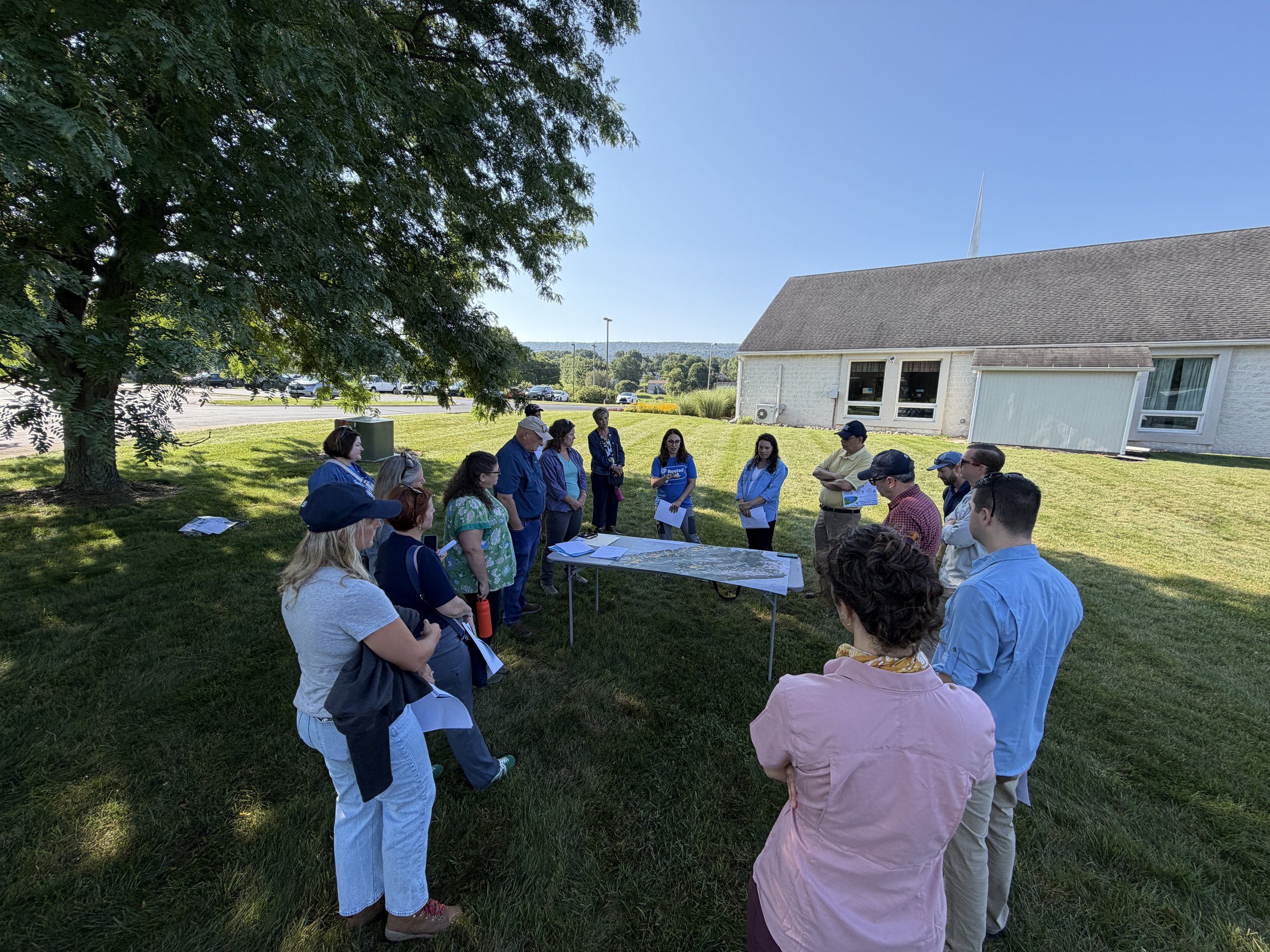
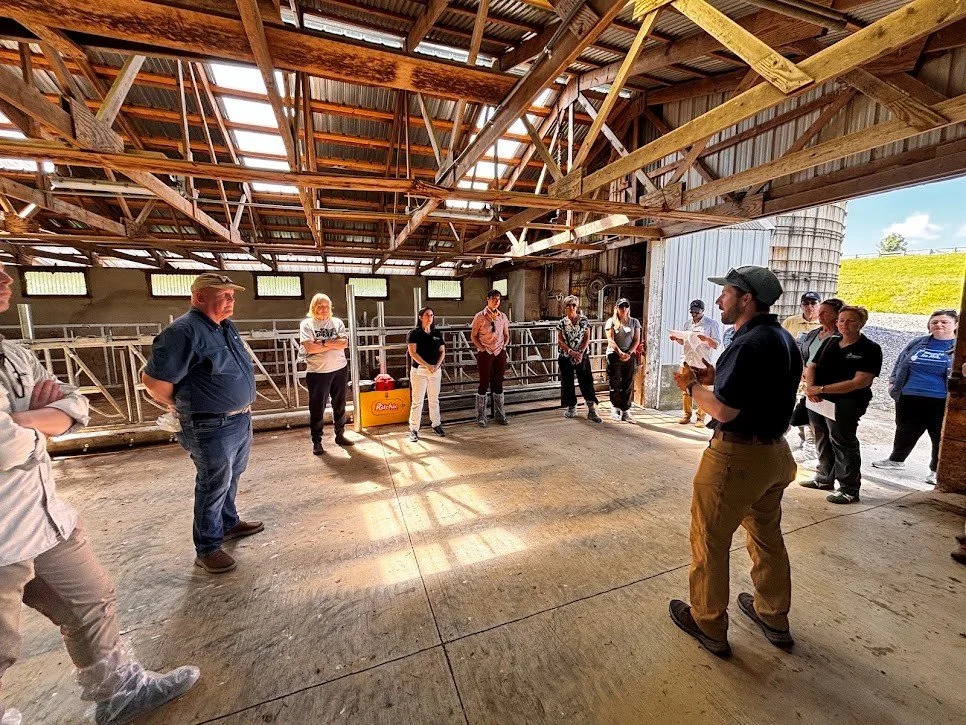
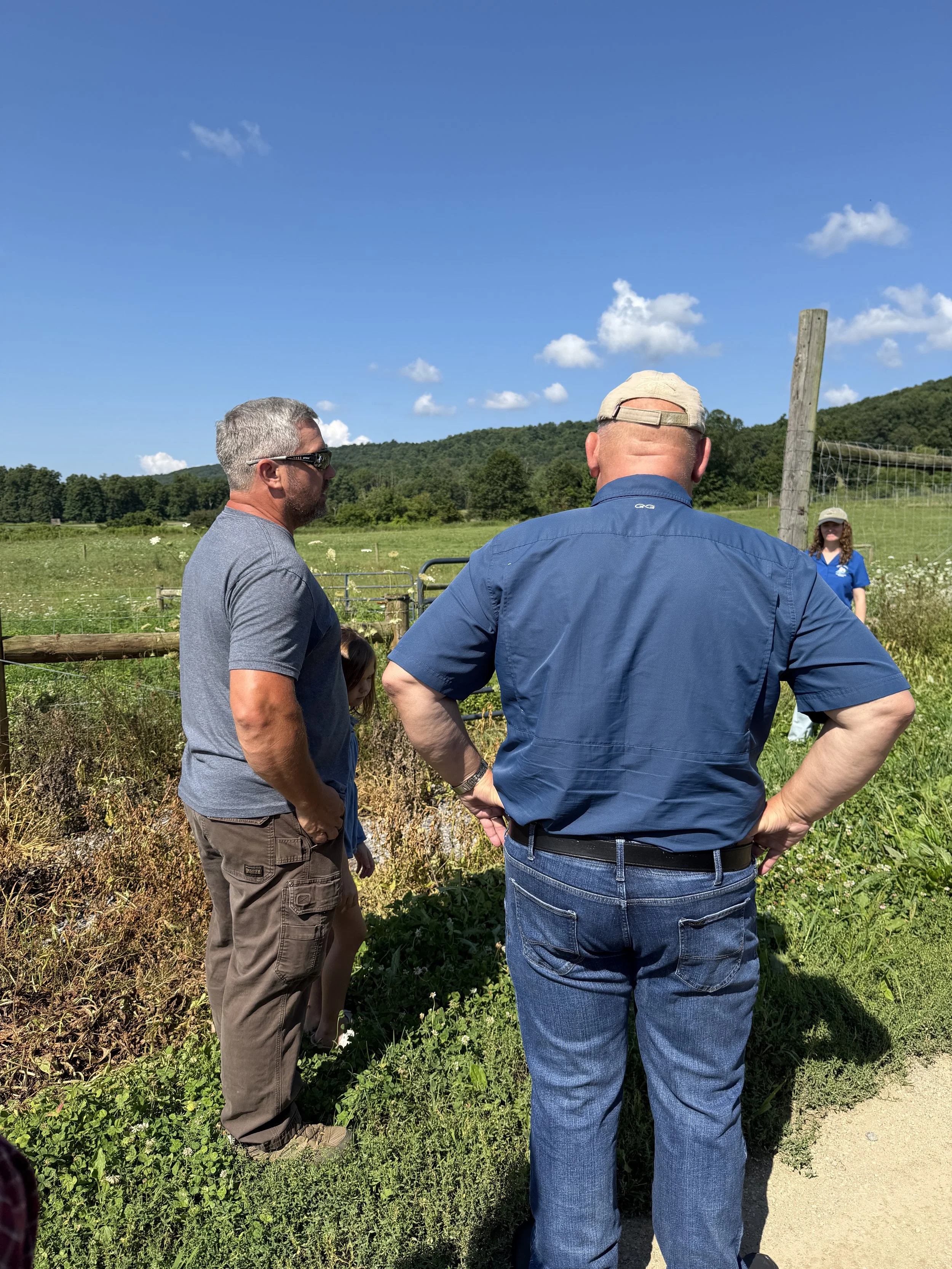
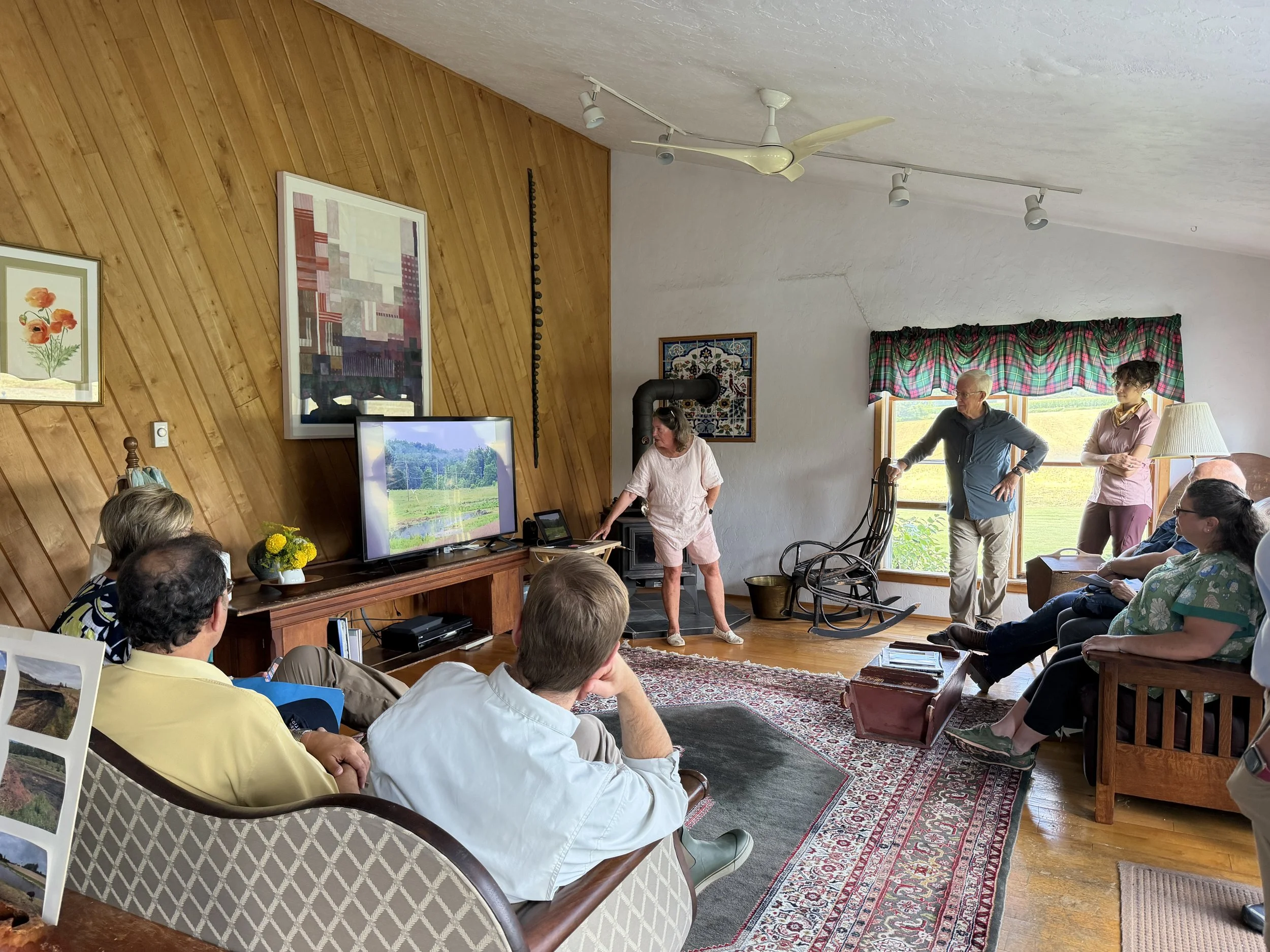
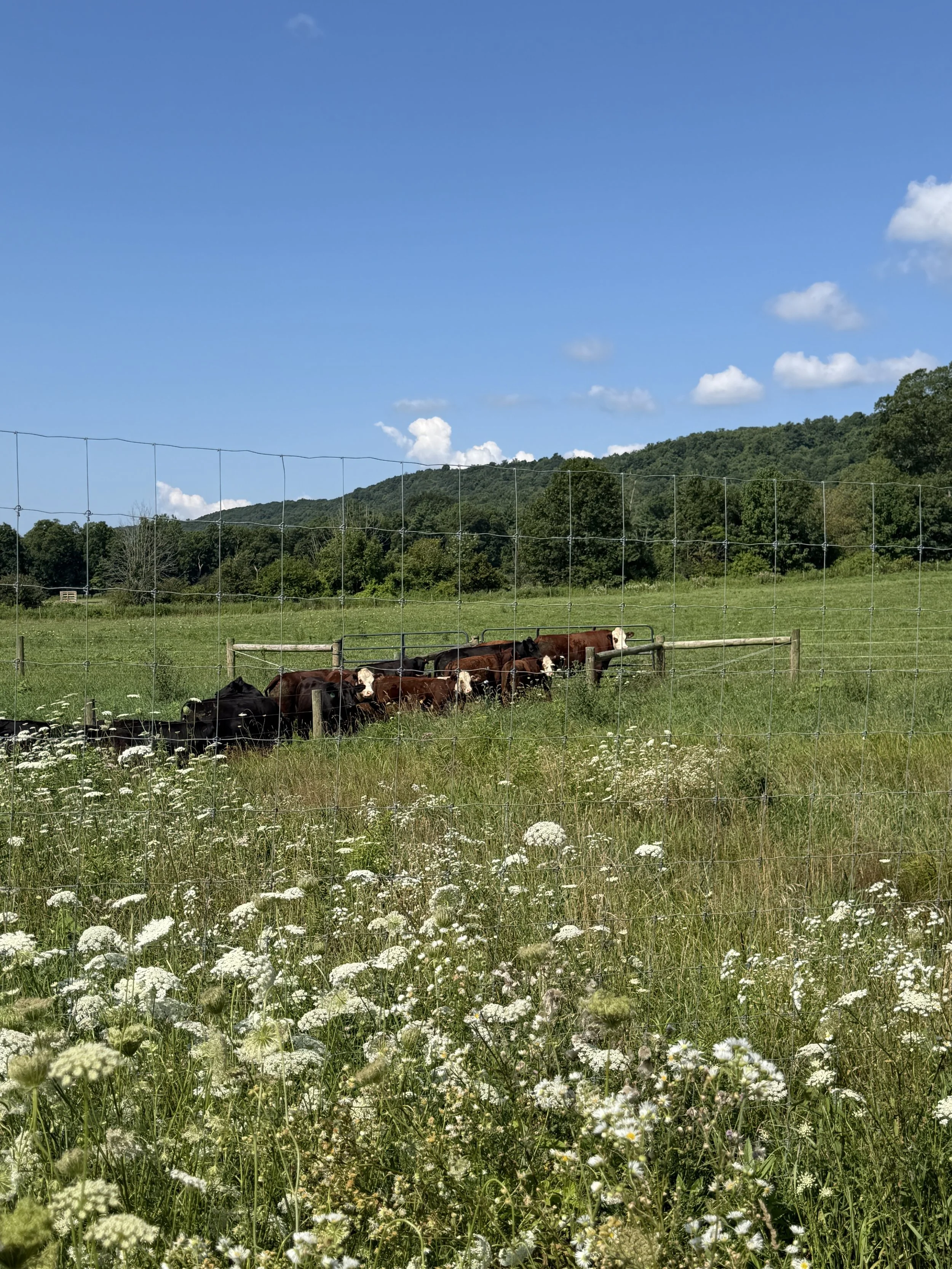
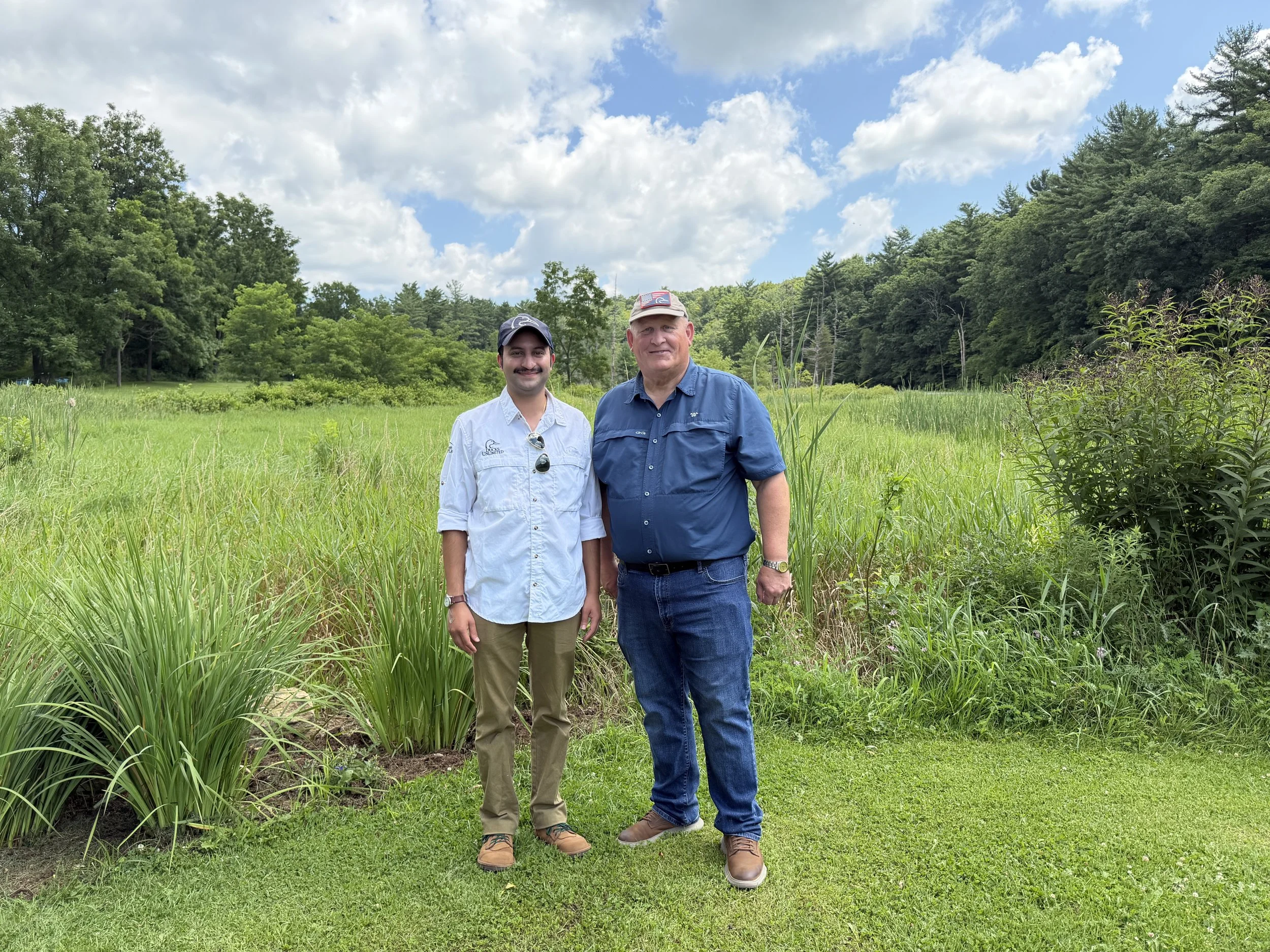
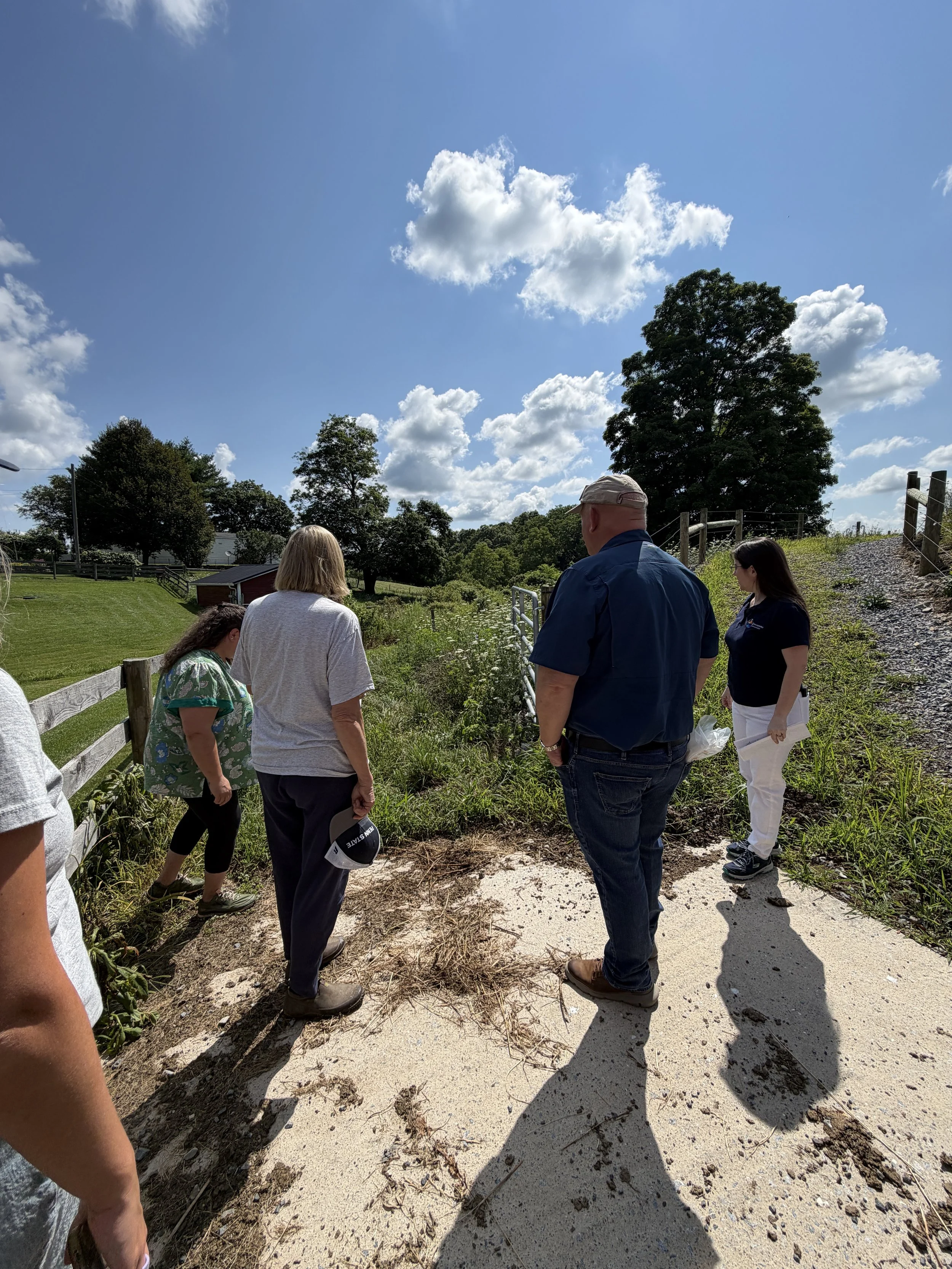
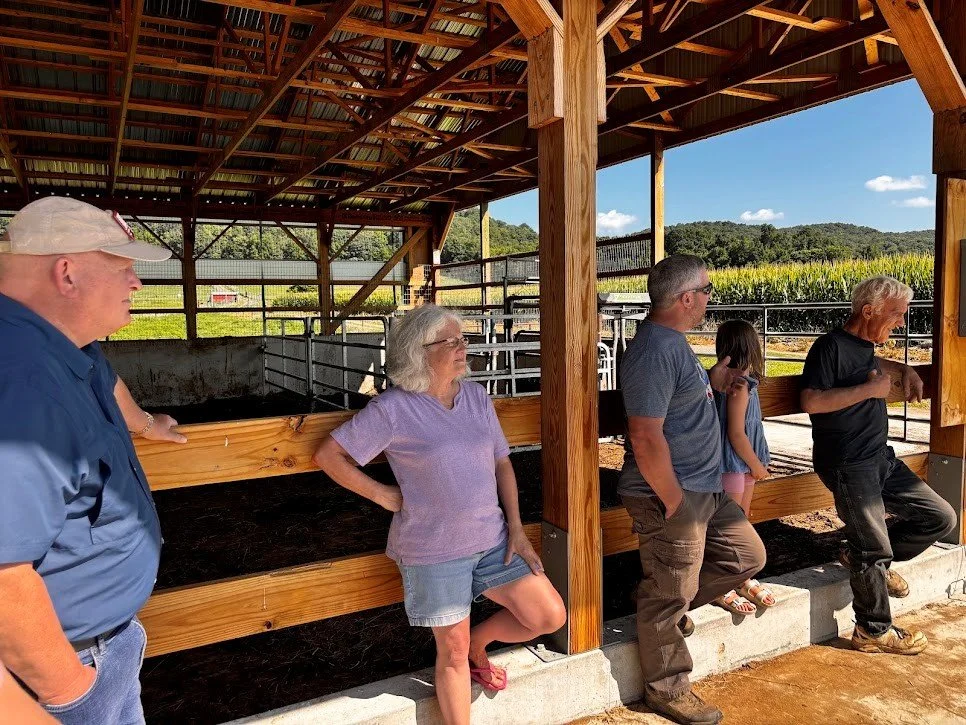
Congressman Thompson, Chairman of the House Agriculture Committee, spent 3.5 hours touring three farms and meeting with the families who ran the operations. Representing the people and farmers of Pennsylvania’s 15th District, Congressman Thompson understands the connection between funding for the Chesapeake Bay restoration effort and clean water improvements in his local communities. That is due, in part, because this is not the first time the Congressman has toured projects like these with the Coalition and our members.
The Coalition first hosted him on a tour of EPA Chesapeake SWG and INSR projects in his district back in 2016. That one-day tour convinced him that it was important for Congress to continue to direct EPA to fund these grants, and he has been a strong advocate for that funding ever since. We all know that concerns about local waters is what motivates people, and that cleaner water upstream means good things downstream for the Bay.
Having over a dozen advocates from Pennsylvania and elsewhere in attendance also means we were not a shy crowd. There were a lot of policy discussions related to the Farm Bill, EPA Chesapeake Bay funding, delisting streams throughout Pennsylvania, wetlands protections, and more. But the central focus for the day was on programs and grants that helped to improve local waters by assisting farmers to be even better stewards of their lands. Those on the tour all recognized that this was just a small piece of the puzzle but that these kinds of local improvements all around the Chesapeake Bay watershed not only improved local waters but also benefited downstream waters, and ultimately Chesapeake Bay.