The last year has seen lots of progress in water quality, conservation, and protection in the New York state portion of the Chesapeake Watershed. The NY Choose Clean Water Coalition Members have been hard at work educating and engaging the community, making progress toward cleaner water.
Here are some highlights from last year:
Upper Susquehanna Forum
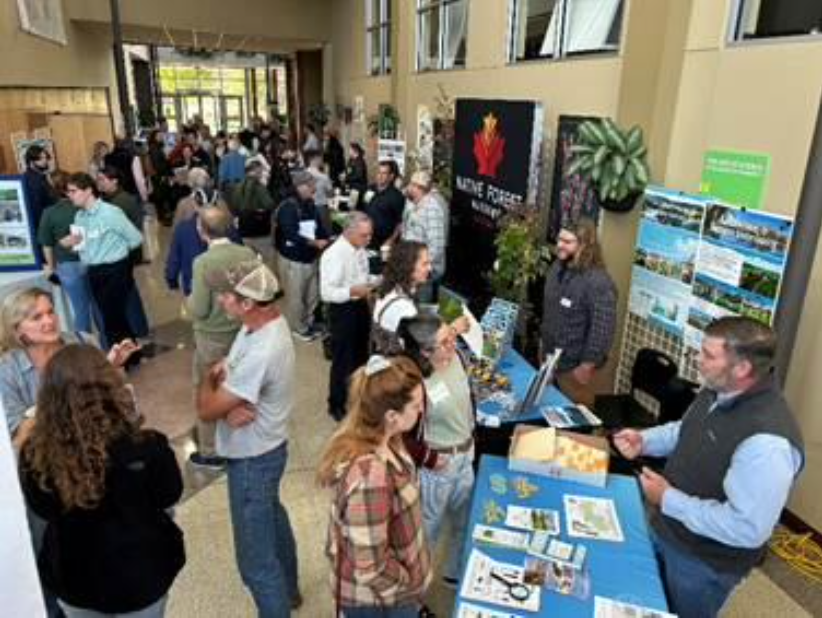
Attendees gather at the 2025 Upper Susquehanna Watershed Forum
Binghamton University, NY - On Thursday, October 2, more than 140 conservation professionals, researchers, students, and community leaders gathered for the 2025 Upper Susquehanna Watershed Forum, a day of knowledge-sharing and collaboration focused on building resilience across New York’s watersheds. The day-long forum showcased a wide range of sessions exploring the intersection of science, policy, and practice in watershed management. The event opened with a keynote address by Dr. Benjamin Hayes, Director of Bucknell University’s Watershed Sciences & Engineering Program, who highlighted how centuries of land-use change continue to shape today’s watershed dynamics. Dr. Hayes emphasized that adaptive restoration offers the most effective path to restoring ecosystem health and resilience. With a wide range of presentation topics divided into two groups of concurrent sessions, and 17 table displays and poster presenters available for discussion, forum attendees had the opportunity to learn, interact and network on a variety of topics.

Through science, innovation and shared commitment, this year’s forum underscored how collective action continues to drive progress toward a more resilient and connected Upper Susquehanna watershed. To learn more click here
Expanding Community Science and Collaboration
The Otsego County Conservation Association, with generous funding from the National Fish and Wildlife Foundation, wrapped up a very successful grant focused on strengthening community science and building capacity through collaboration. The project’s goals were to build new community science teams, expand the work already happening, and collect relevant data to three smaller watersheds that make up the Chesapeake headwaters. In addition, OCCA offered technical assistance to the three, volunteer only watershed protection groups: Butternut Valley Alliance, Canadarago Lake Improvement Association and the Otsego Lake Association.
During the course of the project, OCCA launched three new community science programs: NACCA Certified Culvert Assessment Team, Otsego Lakeshore Monitors Team, and Canadarago Lakeshore Monitors Team.
The programs were highly successful, with volunteers, new and old, joining OCCA staff members to assess a total of 402 culverts throughout the target watersheds. Different teams went out to conduct assessments periodically, but some teams were highly engaged and participated in culvert assessments weekly. With the help of these dedicated volunteers, we successfully assessed all of the culverts in the Otsego Lake and Canadarago Lake watersheds (155 and 180 crossings, respectively) and reassessed 67 crossings in the Butternut Creek watershed. The data collected by our teams was uploaded to the North Atlantic Aquatic Connectivity Collaborative database and will be shared with the NYS Department of Environmental Conservation to prioritize crossings in need of restoration or replacement. The goal of this collaboration is to improve stream connectivity throughout the Upper Susquehanna Watershed and to encourage the development of road-stream crossings that are navigable for aquatic organisms.
Along with successfully achieving its goals, the Culvert Assessment Team Program also fostered the formation of strong relationships between volunteers, OCCA staff, and our community. We pass over culverts and bridges every day, but many of us had previously given little thought to their impact on stream communities. This program encouraged us to think more deeply about the interactions between humans and our environment, and to consider how our roadways may be disconnecting vital stream habitats.
Legislative Highlights:
Environment New York has continued the fight for clean water with their campaigns in watershed projection, clean water infrastructure & Lead Pipe replacement and emerging contaminants like PFAS. Many bills passed by the New York State Senate but were stalled in the NYS assembly.The New York League of Conservation Voters again put out their year-end scorecards for NYS legislators, based on their support of environmental policy during the 2025 legislative session. You can view the scorecards here.
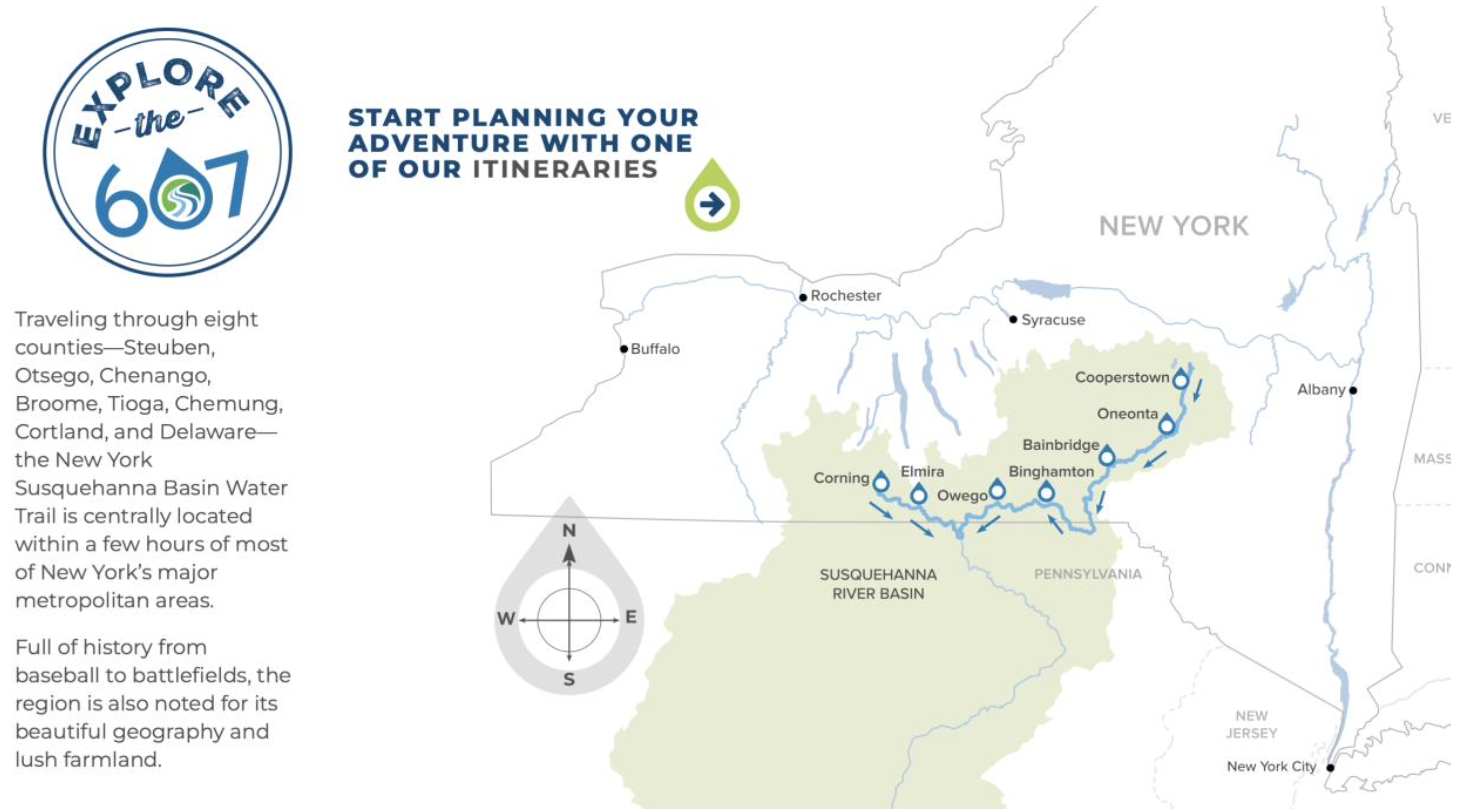
Access: Our member organization, The Friends of the Chemung River Watershed, was a pivotal partner in the launch of the NY Susquehanna River Basin Water Trail in 2025. As one of the Chesapeake Gateways Network Water Trails, this 190-mile Blueway Trail between Cooperstown and Corning is officially open. This expansive collaborative project brought together water conservation, tourism and outdoor recreation groups to provide a comprehensive experience for paddlers, anglers, campers and birders alike! Anyone can visit this gem and also use this comprehensive website to plan your visit!
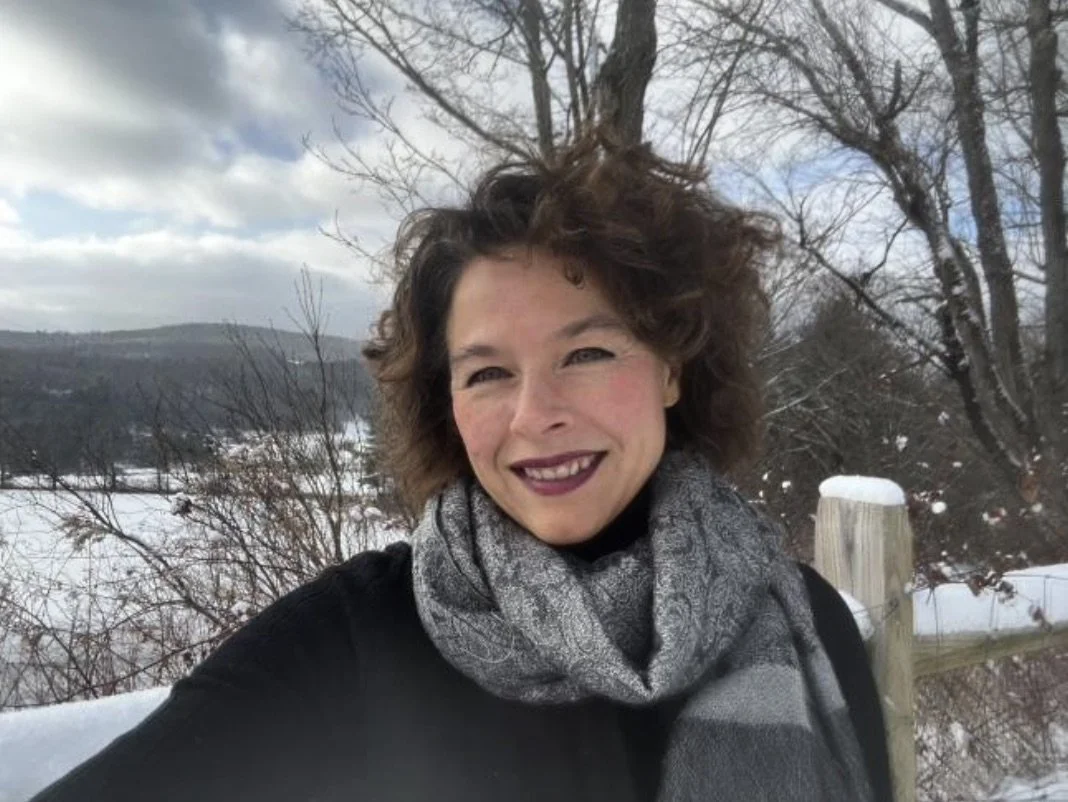
Ostego Land Trust’s new Executive Director, Phoebe Schreiner
Land Preservation: The Otsego Land Trust, a CCWC NY member organization, has been hard at work on land preservation during the 2025 calendar year and also welcomed a new Executive Director last month! Otsego Land Trust welcomed Phoebe Schreiner as their new Executive Director in mid-January, to lead the organization into its next phase of growth and impact.
“It is a great honor to join the committed board and staff of Otsego Land Trust in protecting and conserving land in our region, enhancing biodiversity, maintaining working farms and natural landscapes, and improving New York’s water quality,” said Ms. Schreiner. “I am privileged to build on the outstanding work of Gregory Farmer, the Trust’s outgoing Executive Director, in leading the Land Trust into its next chapter.”
Ms. Schreiner comes to the new position after eight years as Executive Director of the Center for Agricultural Development and Entrepreneurship, Inc. (CADE), an Oneonta-based non-profit that supports thriving New York farm and food businesses. Ms. Schreiner successfully grew CADE from a small nonprofit serving five counties, to an organization that provides services to a client community of over 2,300 agribusinesses in 53 counties statewide. CADE established New York’s first farm and food business incubator and is the largest independent agribusiness service provider in the state.
