Conservation Voters of PA and PennFuture Advocate for Water Standards at Lobby Day
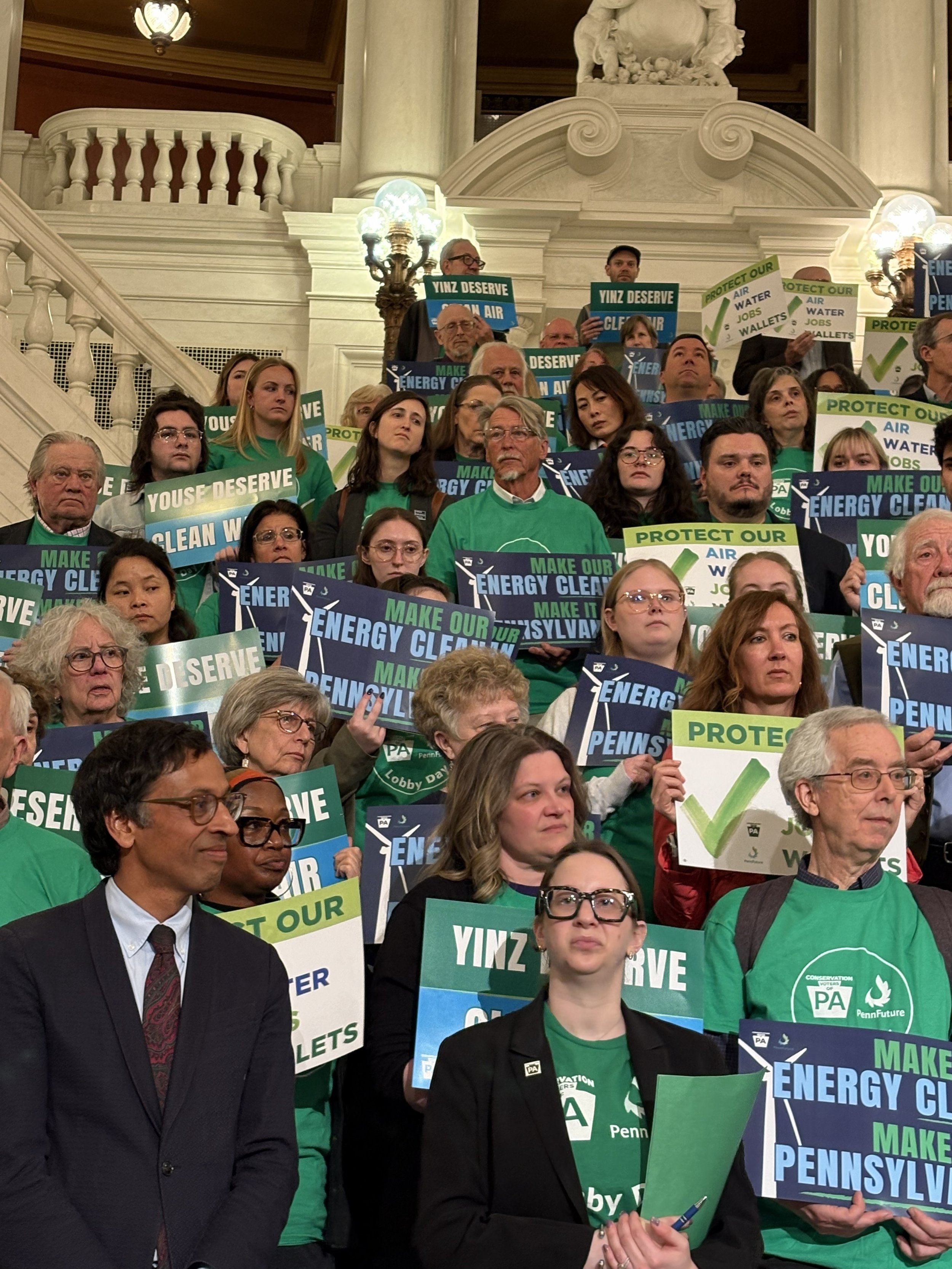
Over 130 Pennsylvanians gathered in Harrisburg for PennFuture and Conservation Voters of PA (CVPA)’s joint lobby day. Volunteers from over 28 counties came from all walks of life. Students, parents, local officials, and workers from all sectors came with the goal of advocating to protect Pennsylvania’s natural resources.
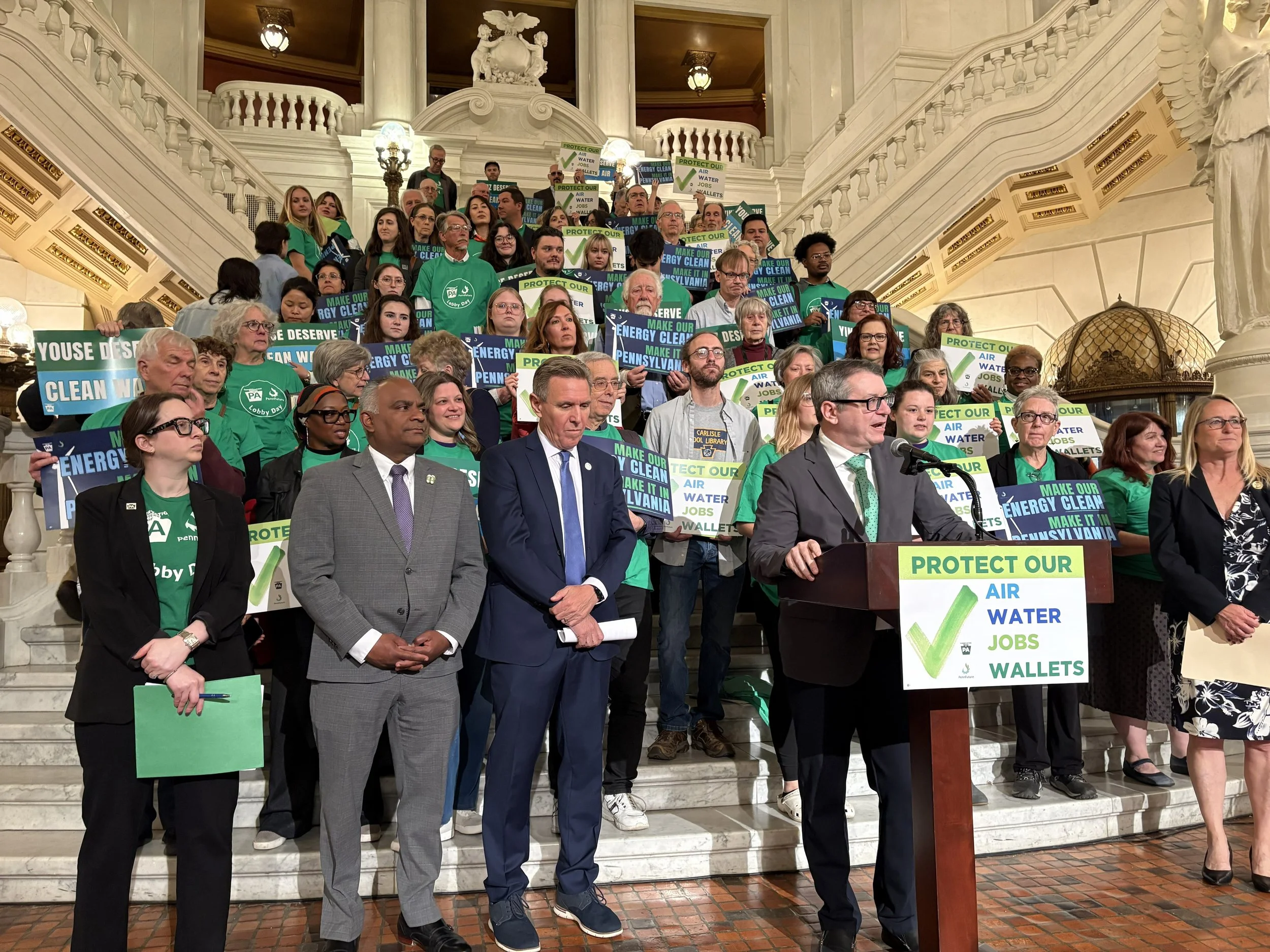
The group met with more than 90 legislative offices within the day to support affordability, oversight on data centers, clean energy, and protections for our water. They lobbied on six bills across party lines. The supported legislation consisted of solutions to lower energy costs, data center transparency and accountability, and enforcing drinking water standards.
HB 2302 and SB 1249 establish water well drilling standards for the three million Pennsylvanians who receive their water from private wells. Currently, Pennsylvania is one of three states that does not have a statewide licensing requirement. It’s also one of two states that does not enforce standards for well siting and construction. Without regulations or a governing entity, improper drilling can lead to polluted groundwater, environmental hazards, and the risk of wells running dry.
It’s important to protect groundwater for the Pennsylvanians that rely on it, but also to maintain the health of the Chesapeake Bay. In the Bay watershed, private wells tap into shallow aquifers connected to surface waters, making it easy for groundwater contaminants to flow into the Bay.
Due to the lack of standards for well drilling, it is not uncommon for septic systems to leak into groundwater or be completely drilled through when creating a new well. Septic line repairs are time-consuming and costly, as we experienced at the beginning of 2026.
A massive sewage spill into the Potomac River released roughly 240 million gallons of untreated sewage into the river, introducing dangerous levels of water quality degradation and habitat disruption. The spill started on January 19th, and a temporary fix was completed in March. According to the Potomac Conservancy, the plans for a permanent fix will not be fully completed until fall of 2027, over a year since the date of the initial burst. The entirety of the environmental impacts the spill had on the Chesapeake Bay is still yet to be determined. DC Water, the Maryland Department of the Environment, EPA, and the U.S. Army Corps of Engineers are continuing to monitor water quality and working to mitigate affected shorelines.
The Potomac River sewage spill is a cautionary tale for a problem in cities all around the Chesapeake Bay region, and a testament for the need to update water systems whenever possible.
Currently, both HB 2302 and SB 1249 are in the Senate Consumer Protection and Professional Licensure Committee. With only 12 session days left, it is uncertain whether the Senate will pass better water standards to Pennsylvania. But what is certain is that both CVPA and PennFuture will continue to fight for a healthier environment and urge lawmakers to deliver for Pennsylvanians.